
When the sun starts to warm the air and summer beckons, nothing delights quite like a Traditional Greek Horiatiki Salad. The vibrant colors and fresh ingredients transport me straight to a sun-drenched terrace overlooking the Aegean Sea. Imagine biting into juicy tomatoes, crisp cucumbers, and zesty red onions, all enhanced by the creaminess of feta and the briny pop of Kalamata olives. This no-cook wonder is perfect for those lazy afternoons or spontaneous gatherings with friends.
What truly sets this salad apart is its simplicity; each ingredient shines on its own while creating a harmonious medley. Ready in just minutes, it’s an effortless way to bring Mediterranean charm to your table. Whether you’re enjoying it as a light meal or as a refreshing sidekick to your favorite grilled dish, this healthy, vegetarian delight is bound to impress. So grab your freshest produce and let’s create a culinary experience that celebrates the essence of Greek cuisine!
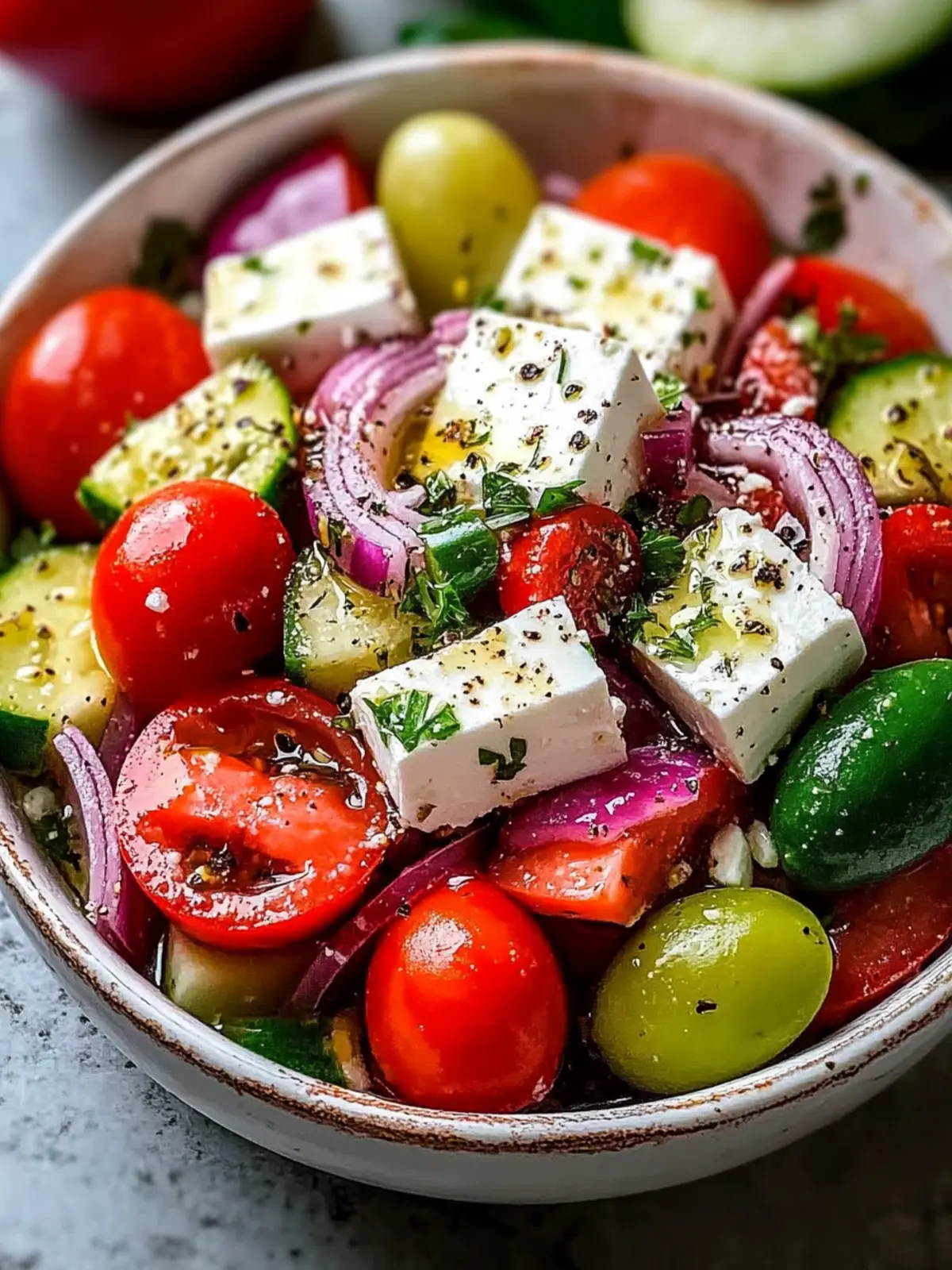
Why is Traditional Greek Horiatiki Salad a Must-Try?
Vibrant Flavors: This salad bursts with fresh, zesty ingredients that sing summer on your plate.
No-Cook Convenience: It requires zero cooking, making it the perfect quick meal or side dish for hot weather.
Healthy & Nutritious: Packed with vitamins and healthy fats, it aligns perfectly with your wellness goals.
Crowd-Pleasing Appeal: Ideal for gatherings, its beautiful presentation and robust flavors make it a standout choice.
Culinary Journey: Enjoy a taste of Greece right at home with this authentic recipe. If you’re seeking more healthy options, don’t miss our section on Mediterranean diet benefits.
Traditional Greek Horiatiki Salad Ingredients
Here’s what you’ll need to create your mouthwatering Traditional Greek Horiatiki Salad:
For the Salad
• Tomatoes – Use ripe heirloom or vine-ripened varieties for the juiciest flavor.
• Cucumber – Persian or English cucumbers add a delightful crunch and freshness; no peeling needed.
• Red Onion – Soak in cold water for 10 minutes to soften its sharpness if desired.
• Cherry Tomatoes – Optional, but they bring extra color and sweetness; halve for easier mixing.
• Kalamata Olives – Choose between whole or pitted olives for a briny burst in each bite.
• Greek Feta Cheese – Cut into cubes or slabs for a traditional presentation that keeps its rich creaminess.
For the Dressing
• Extra Virgin Olive Oil – Essential for drizzling, it enhances all the fresh flavors beautifully.
• Dried Oregano – A key herb that brings a distinctly Mediterranean touch to your salad.
• Red Wine Vinegar – Optional, but it adds a punch of acidity that complements the creamy feta.
• Sea Salt & Freshly Ground Black Pepper – Season to taste, enhancing all those fresh flavors.
Now that you have your ingredients ready, it’s time to embrace the joy of creating your very own Traditional Greek Horiatiki Salad!
How to Make Traditional Greek Horiatiki Salad
-
Prepare Vegetables: Begin by washing and drying your tomatoes, cucumbers, and red onions. Slice the tomatoes into wedges, cut the cucumbers into rounds or half-moons, and thinly slice the onions. If the onion flavor is too sharp, soak them in cold water for 10 minutes.
-
Layer Ingredients: In a large, shallow bowl or serving platter, create a base of cucumber slices and tomato chunks. Gradually add onion rings, and if you chose to include them, sprinkle over the halved cherry tomatoes and Kalamata olives for added color and flavor.
-
Add Feta: Carefully place cubes or slabs of Greek feta cheese on top of the salad without crumbling them. This preserves a rustic presentation and allows the creamy texture to shine.
-
Dress Salad: Generously drizzle high-quality extra virgin olive oil over the layered ingredients. Then, sprinkle with dried oregano, sea salt, and freshly ground black pepper. If you enjoy tanginess, feel free to add red wine vinegar at this stage.
-
Garnish & Serve: If you’d like, finish off the salad with a sprinkle of fresh parsley or oregano. Serve immediately at room temperature, pairing it with crusty bread or pita for a delightful meal.
Optional: Add a squeeze of fresh lemon juice for an extra burst of flavor.
Exact quantities are listed in the recipe card below.
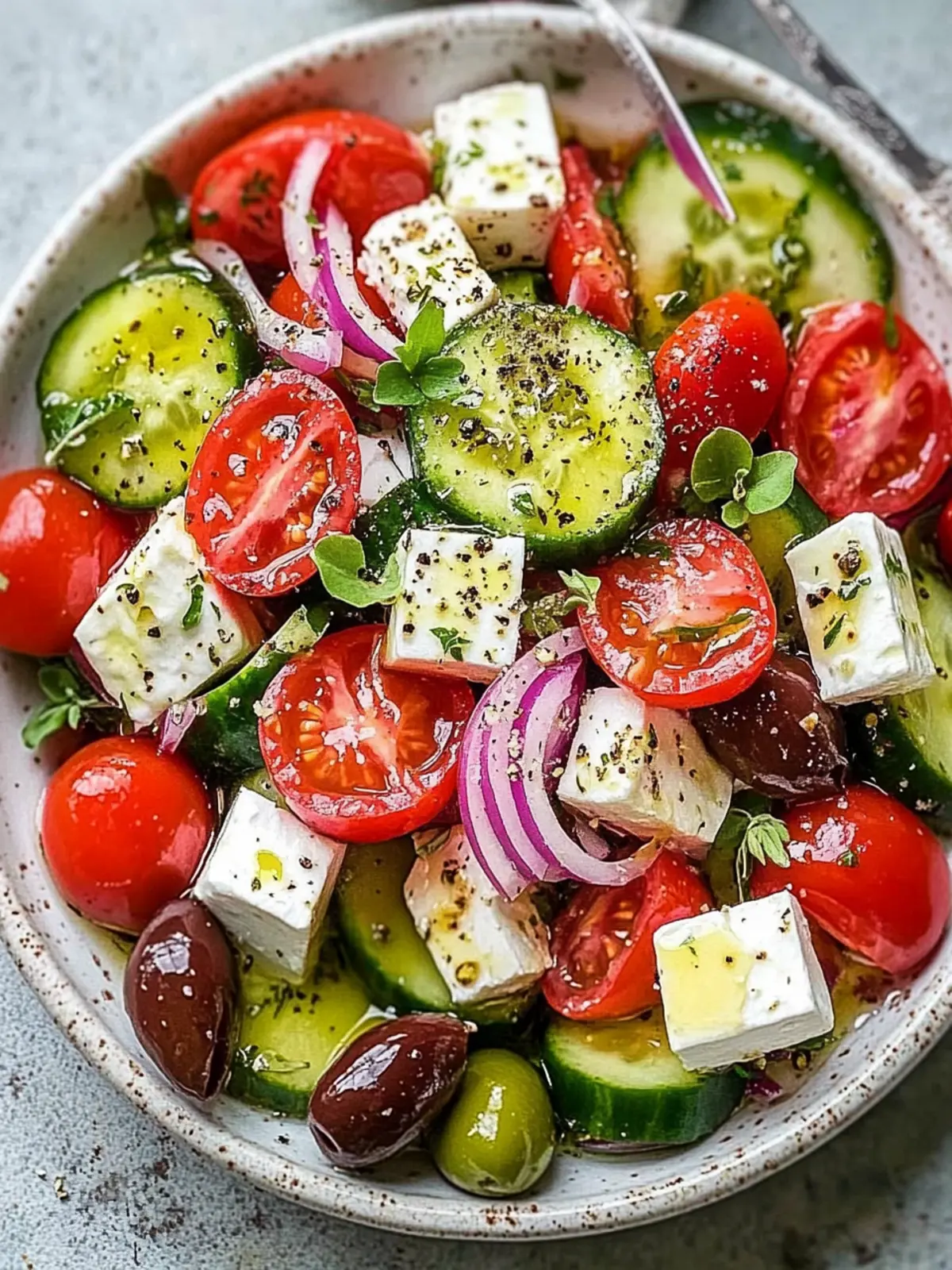
Expert Tips for Traditional Greek Horiatiki Salad
-
Fresh is Best: Always choose the ripest tomatoes and crisp cucumbers. Quality ingredients are key to achieving that authentic flavor in your Traditional Greek Horiatiki Salad.
-
Onion Soaking: If red onions are too pungent for your taste, remember to soak them in cold water for 10 minutes. This will mellow their sharpness significantly.
-
Add Dressing Last: To keep your salad fresh and prevent sogginess, add the oil, vinegar, and salt just before serving. This ensures every bite remains perfect.
-
Use Rustic Cuts: For a true rustic presentation, cut the feta into slabs or cubes rather than crumbling it. This keeps it intact and enhances the salad’s aesthetic appeal.
-
Let It Rest: Allow the salad to sit for a few minutes after dressing, letting the flavors meld together beautifully before you dig in.
What to Serve with Traditional Greek Horiatiki Salad?
Elevate your dining experience with beautifully complementary flavors and textures alongside this Mediterranean gem.
- Grilled Chicken Skewers: Tender, marinated chicken adds a smoky, savory element that balances the salad’s fresh, bright flavors.
- Stuffed Pita Bread: Fluffy pita pockets filled with herbs and spices pair perfectly, allowing you to enjoy bits of salad nestled within.
For a delightful twist, consider serving it with a side of lightly marinated grilled vegetables. The charred edges and earthy notes enhance the freshness of the Horiatiki Salad beautifully.
- Roasted Lamb Chops: The richness of lamb complements the salad’s vibrant notes, creating a harmonious Mediterranean feast.
- Greek Yogurt Dip: Creamy tzatziki made with cucumber and garlic enhances the freshness of the salad, adding another layer of texture.
- Herbed Quinoa: A light, nutty quinoa side tossed with fresh herbs mirrors the salad’s flavors and adds a wholesome touch.
Finish the meal with a sparkling white wine or a refreshing lemonade for a zesty contrast.
Traditional Greek Horiatiki Salad Variations
Feel free to personalize your salad and explore exciting twists that bring out even more flavor and fun!
- Cheese Swap: Substitute feta with ricotta salata or grilled halloumi for a different, yet delicious taste.
- Herb Infusion: Add fresh herbs like mint or dill for a refreshing twist on the classic flavor profile.
- Caper Option: Replace Kalamata olives with capers to introduce a tangy flavor that’s equally delightful.
- Add Avocado: Incorporate creamy avocado for a luscious texture and a boost of healthy fats in each bite.
- Spice it Up: Toss in some sliced jalapeños or sprinkle crushed red pepper flakes for a zesty kick.
- Nutty Flavor: Add toasted pine nuts or walnuts for a delightful crunch and depth to your salad.
- Roasted Veggies: Experiment with roasted bell peppers or zucchini for a smoky flavor twist.
- Top with Chickpeas: Mix in canned chickpeas for added protein and a satisfying heartiness to the dish.
Your journey in the kitchen is boundless—mix, match, and discover your family’s favorite combination!
Make Ahead Options
Preparing your Traditional Greek Horiatiki Salad in advance is a fantastic way to save time on busy days! You can chop and store all the vegetables—tomatoes, cucumbers, and onions—in an airtight container in the refrigerator for up to 3 days. To maintain quality, avoid adding salt or dressing until just before serving, as this prevents the vegetables from becoming soggy. Store feta and olives separately to keep their textures intact. When it’s time to serve, simply layer the prepped veggies in a bowl, add the feta, drizzle with olive oil, and season with oregano, salt, and pepper for a fresh, vibrant salad that tastes just as delicious as if it were made that day!
How to Store and Freeze Traditional Greek Horiatiki Salad
Fridge: Store leftover salad in an airtight container in the refrigerator for up to 2 days. Remember to drain excess liquid before serving to maintain freshness.
Room Temperature: It’s best enjoyed fresh, but if left out, consume within 2 hours to ensure food safety.
Freezer: Freezing is not recommended, as the vegetables’ texture and quality can suffer, making the salad soggy when thawed.
Reheating: Since Traditional Greek Horiatiki Salad is served cold, simply enjoy it straight from the fridge without reheating for the best experience.
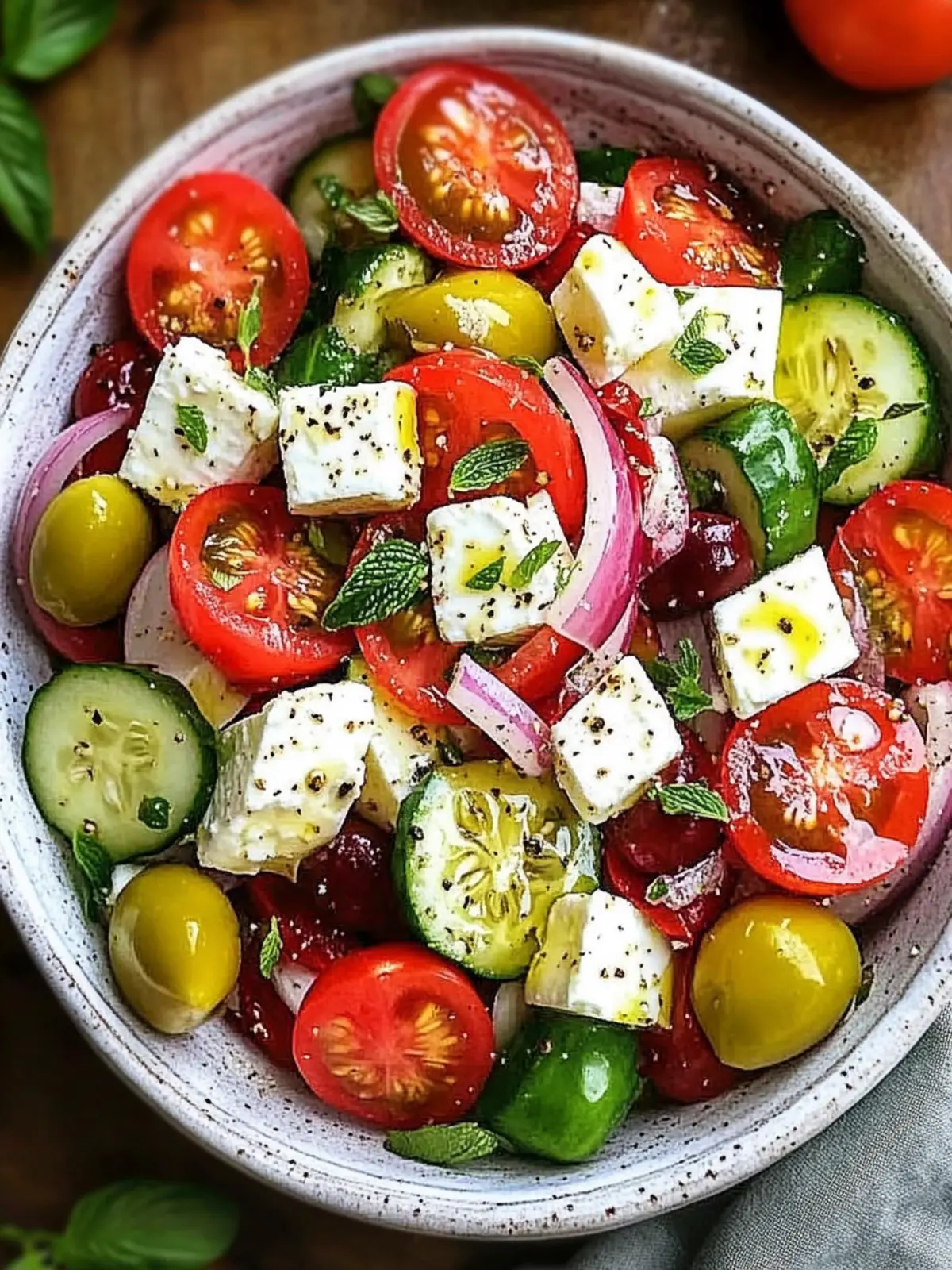
Traditional Greek Horiatiki Salad Recipe FAQs
What kind of tomatoes should I use for the salad?
Absolutely! For the best flavor, use ripe heirloom or vine-ripened tomatoes. Look for tomatoes that are firm yet slightly soft to the touch, with a deep red color. Avoid those with dark spots or wrinkles, as they may lack juiciness.
How should I store leftover Traditional Greek Horiatiki Salad?
Store any leftover salad in an airtight container in the refrigerator. It will stay fresh for up to 2 days. Just remember to drain any excess liquid before serving again to maintain the crunchiness of the ingredients!
Can I freeze Traditional Greek Horiatiki Salad?
No, freezing is not recommended for this salad. The texture of the tomatoes and cucumbers can turn mushy once thawed. Instead, it’s best enjoyed fresh, so make it as close to serving time as possible!
What can I do if my red onions are too strong?
If the taste of red onions is too biting, soaking them in cold water for 10 minutes does wonders! Just slice your onions, let them soak, then drain before adding them to the salad. This will beautifully mellow their flavor.
Is this salad suitable for people with nut allergies?
Yes, the Traditional Greek Horiatiki Salad is naturally nut-free, making it a great option for those with nut allergies. However, always make sure to double-check labels on any pre-packaged ingredients like feta or olives to ensure they haven’t been processed in facilities that handle nuts.
Are there any dietary considerations for pets?
While the common ingredients in this salad—like cucumbers and tomatoes—are generally safe for pets in small amounts, avoid giving them feta, olives, and any added seasonings (like salt and oil) as these can be harmful. Always consult your vet before sharing human food with your furry friends.
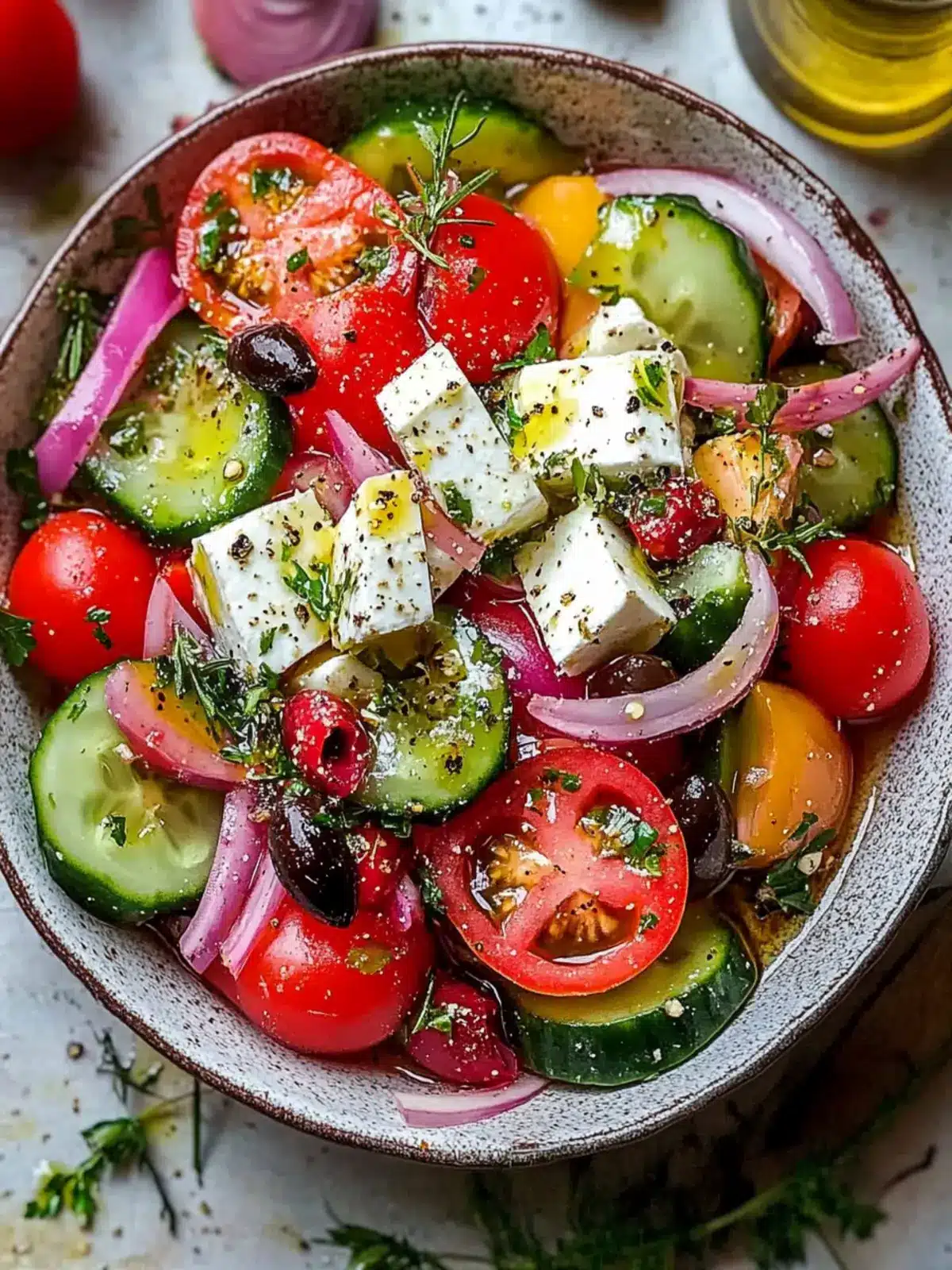
Savor the Freshness: Traditional Greek Horiatiki Salad Recipe
Ingredients
Equipment
Method
- Wash and dry tomatoes, cucumbers, and red onions. Slice tomatoes into wedges, cut cucumbers into rounds or half-moons, and thinly slice onions.
- In a large bowl, create a base of cucumber slices and tomato chunks. Add onion rings, halved cherry tomatoes, and Kalamata olives.
- Place cubes or slabs of Greek feta cheese on top without crumbling them.
- Drizzle extra virgin olive oil over the ingredients. Sprinkle with dried oregano, sea salt, and freshly ground black pepper. Optional: add red wine vinegar.
- Garnish with fresh parsley or oregano if desired. Serve immediately at room temperature.