
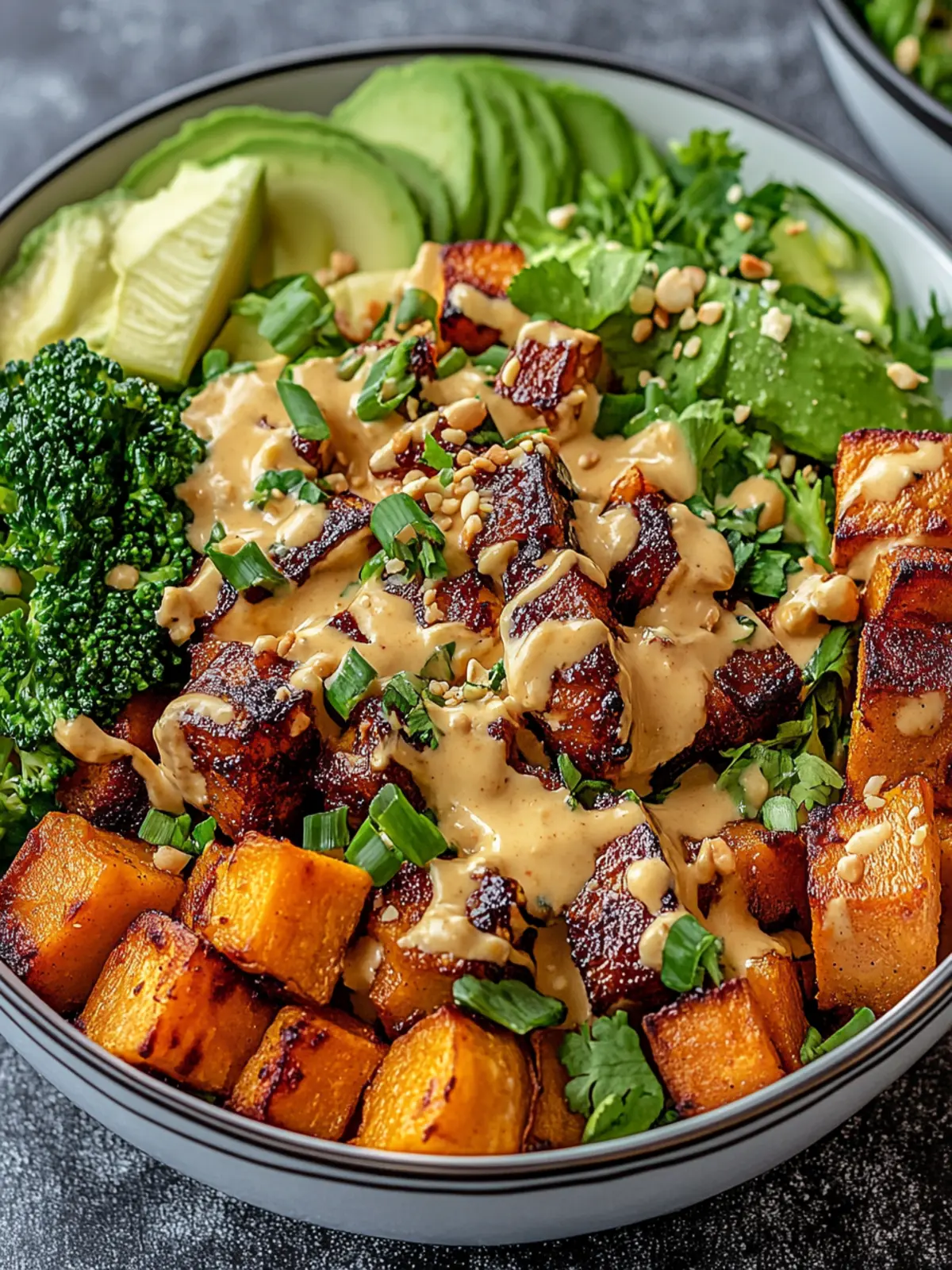
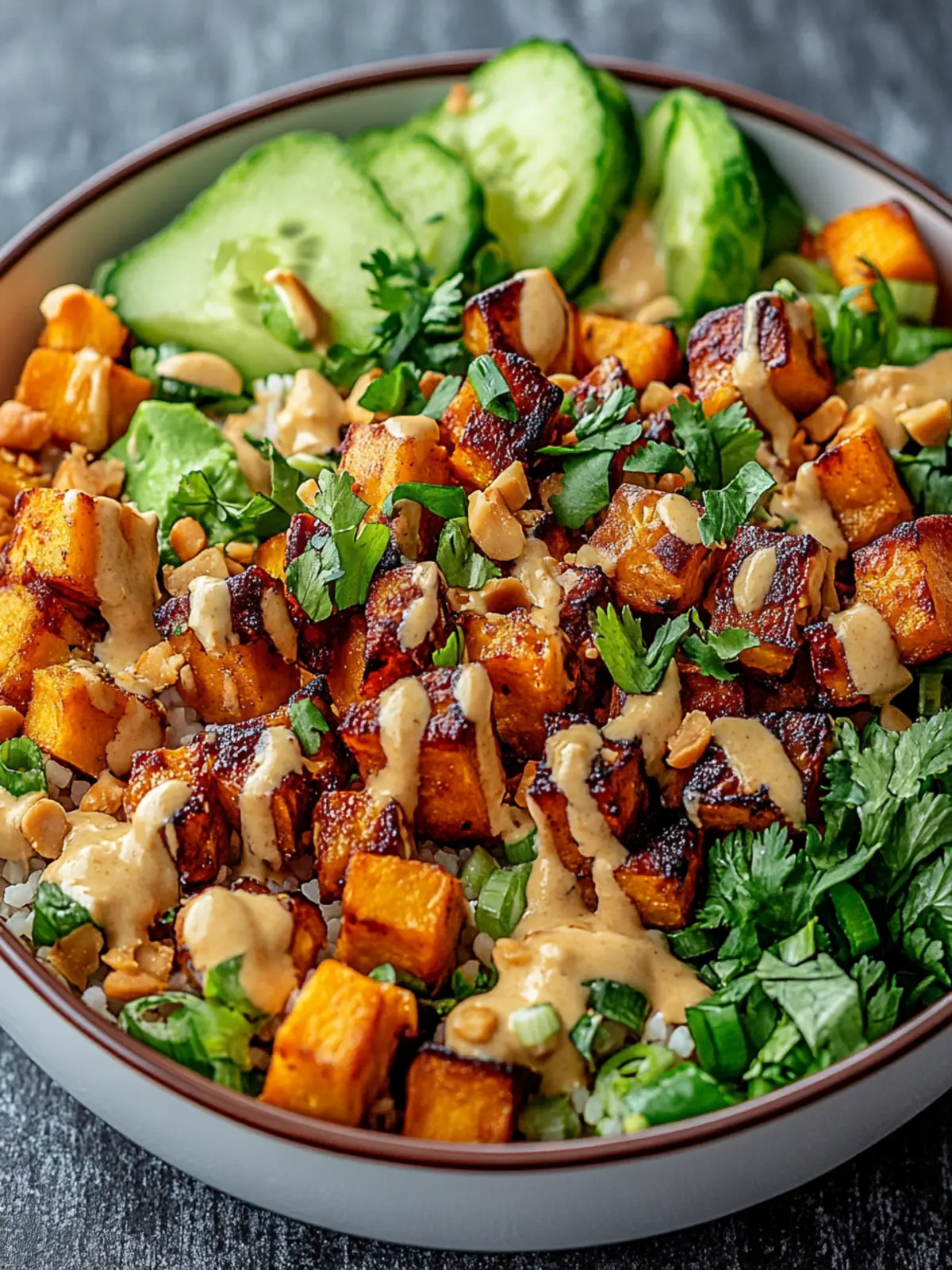
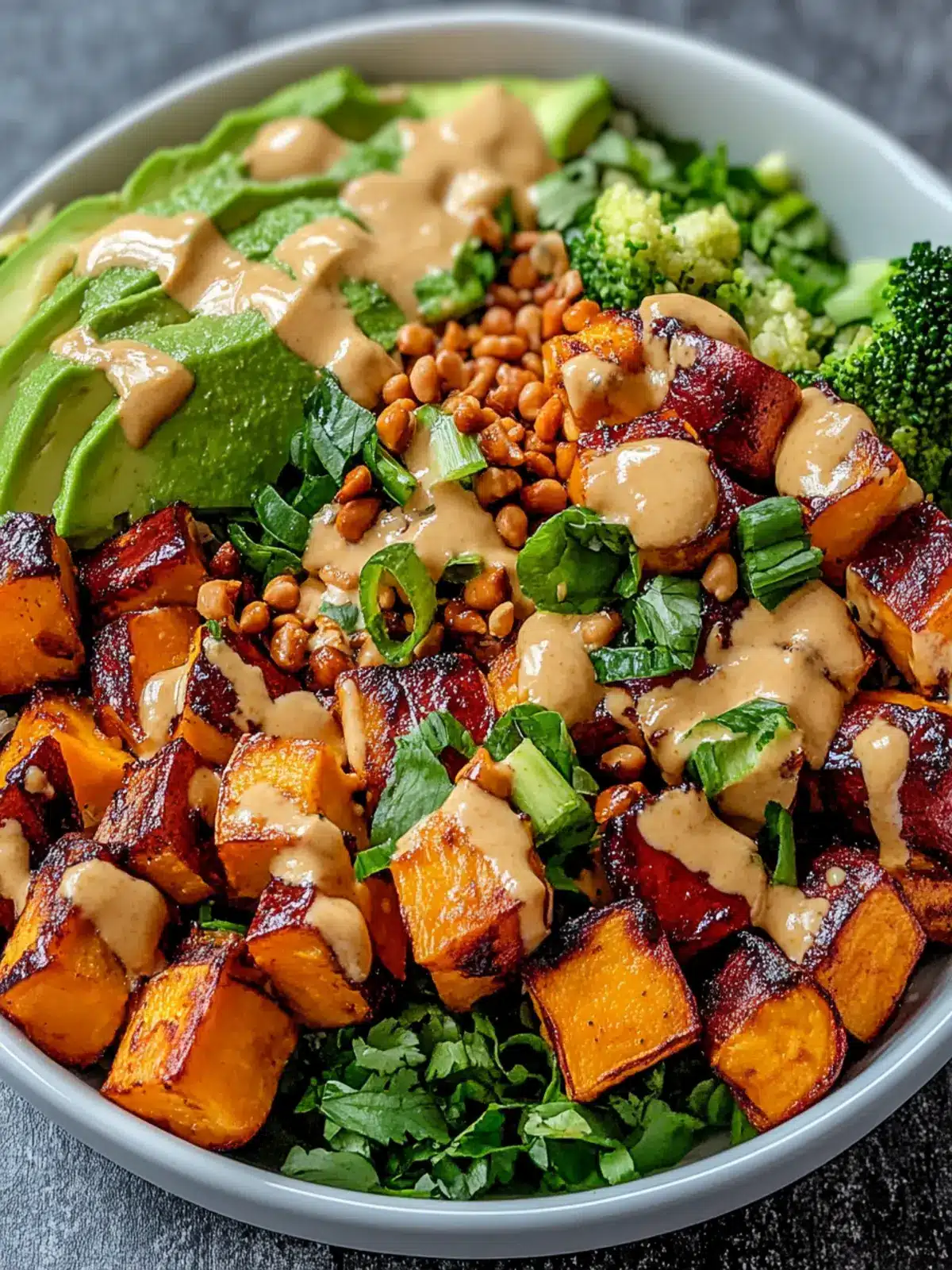
After a long day, when I crave something wholesome yet delightful, the Thai Peanut Sweet Potato Buddha Bowl always comes to mind. Picture this: warm, roasted sweet potatoes whose natural sweetness balances beautifully with vibrant veggies. Each bite is a dance of textures and flavors—rich, creamy peanut sauce drizzled over fresh broccoli, crunchy cabbage, and colorful carrots creates a visual feast as much as a culinary one.
This dish is a lifesaver for busy weeknights or plant-based meal prep, helping you break free from the monotony of fast food. Plus, it’s easily adaptable—have chickpeas on hand? Toss them in! Feeling adventurous? Swap the sweet potatoes for some roasted butternut squash. Each bowl is a nourishing canvas that celebrates simplicity and taste while ensuring you hit all your dietary goals. Ready to create this vibrant dish that’s packed with flavor and nutrition? Let’s dive in!

Why Will You Love Thai Peanut Sweet Potato Buddha Bowl?
Flavor Explosion: This Thai Peanut Sweet Potato Buddha Bowl bursts with vibrant tastes, combining the natural sweetness of roasted sweet potatoes and the creamy richness of the peanut sauce.
Ease of Preparation: Whip this up quickly! Perfect for busy weeknights, this recipe comes together in under an hour, allowing you to enjoy a satisfying meal without the fuss.
Nutrient-Rich: Packed with veggies like broccoli and carrots, this bowl is as nutritious as it is delicious.
Meal Prep Friendly: Ideal for meal prepping, you can mix and store components separately to keep your meals fresh all week.
Versatile Variations: Change it up with ingredients like roasted butternut squash or chickpeas to suit your taste preferences—every bowl can be a new creation!
Crowd-Pleaser: Whether for a family dinner or a gathering with friends, this Buddha bowl is sure to impress and satisfy everyone at the table.
Thai Peanut Sweet Potato Buddha Bowl Ingredients
Get ready for a flavorful adventure with this tasty Thai Peanut Sweet Potato Buddha Bowl!
For the Buddha Bowl
• Sweet Potatoes – Provides natural sweetness; roast until golden for a caramelized flavor.
• Broccoli Florets – Adds crunch and nutrients, balancing the dish’s sweetness.
• Shredded Cabbage – Offers freshness and texture; can swap for napa cabbage.
• Grated Carrots – Introduces vibrant color and sweetness; zucchini is a great substitute.
• Avocado – Brings creaminess and healthy fats; you canuse tahini for a similar richness.
For the Peanut Sauce
• Peanut Butter – The sauce’s creamy base; almond or sunflower seed butter can replace it if needed.
• Soy Sauce – Infuses umami and saltiness; consider low-sodium options for a healthier twist.
• Maple Syrup – Balances the flavors with sweetness; agave nectar is a useful substitute.
• Lime Juice – Brightens the dish’s flavors; lemon juice works as an alternative.
• Sesame Oil – Adds depth and aroma; olive oil can be used for a different flavor.
For Garnish
• Chopped Cilantro – A fresh finishing touch that enhances the overall flavor; parsley can be used instead.
• Peanuts – Provides a delightful crunch and serves as a garnish; omit for nut-free versions.
This Thai Peanut Sweet Potato Buddha Bowl will not only be a hit during dinner but also serve as a nutritious option for those looking to enjoy homemade meals.
How to Make Thai Peanut Sweet Potato Buddha Bowl
-
Preheat your oven to 400°F (200°C). Get your oven warmed up, so you can achieve perfectly roasted sweet potatoes.
-
Dice the sweet potatoes into bite-sized pieces and spread them evenly on a baking sheet. Drizzle with olive oil and season with salt and pepper, then roast for about 25-30 minutes until they’re golden brown and crispy.
-
Combine the fresh veggies! In a large bowl, mix the broccoli florets, shredded cabbage, grated carrots, and diced avocado. Toss gently until everything is evenly distributed and colorful.
-
Whisk together the peanut sauce in a small bowl by mixing peanut butter, soy sauce, maple syrup, lime juice, and sesame oil until the mixture is smooth and creamy.
-
Assemble the Buddha bowl by layering your mixed veggies at the base of a serving dish. Top with the roasted sweet potatoes, then drizzle a generous amount of peanut sauce over the top.
-
Garnish your bowl with chopped cilantro and a sprinkle of peanuts for that crunchy finish!
Optional: Add a sprinkle of sriracha for a kick of spice.
Exact quantities are listed in the recipe card below.
What to Serve with Thai Peanut Sweet Potato Buddha Bowl?
Creating a delightful dining experience is all about balance and complementary flavors. Here are some perfect additions to round out your meal.
- Quinoa Salad: A light, protein-packed dish that adds a nutty texture, enhancing the nutritional profile alongside the Buddha bowl.
- Roasted Cauliflower: The caramelized edges and savory flavor of roasted cauliflower beautifully complement the sweet profile of the sweet potatoes.
- Crispy Tofu: Add grilled or baked tofu for a satisfying protein boost, which pairs wonderfully with the creamy peanut sauce.
- Coconut Rice: Fragrant coconut-infused rice adds a subtle sweetness and creamy texture that harmonizes perfectly with the Thai flavors.
- Fresh Spring Rolls: These crunchy, veggie-packed rolls, often served with a light dipping sauce, elevate the meal’s freshness and variety.
- Mango Chutney: A spoonful of sweet and tangy mango chutney contrasts nicely with the savory elements, brightening the overall taste.
- Ginger Lemonade: A refreshing and zesty beverage that cleanses the palate between bites, making each taste of the Buddha bowl memorable.
- Dark Chocolate Squares: For a simple yet indulgent dessert, enjoy a tiny square of dark chocolate; its slight bitterness beautifully offsets the dish’s sweetness.
Expert Tips for the Best Thai Peanut Sweet Potato Buddha Bowl
-
Roast Smartly: Ensure even roasting of sweet potatoes by giving them ample space on the baking sheet; overcrowding leads to steaming, not that crispy texture you desire.
-
Flavor Balance: Taste and adjust the peanut sauce before drizzling it over your bowl; you want that perfect sweet and savory harmony to elevate your Thai Peanut Sweet Potato Buddha Bowl.
-
Freshness Matters: Keep components stored separately when meal prepping to maintain the freshness and crunch of the veggies, ensuring every bite is as delightful as the first.
-
Get Creative: Don’t hesitate to experiment! Swap in seasonal vegetables or proteins according to your taste to make every Thai Peanut Sweet Potato Buddha Bowl uniquely yours.
-
Sauce it Up: For an extra flavor punch, stir in sriracha or red pepper flakes to the peanut sauce for a delightful spiciness that can surprise your palate.
Thai Peanut Sweet Potato Buddha Bowl Variations
Customize your Thai Peanut Sweet Potato Buddha Bowl to suit your taste buds and pantry staples with these delicious ideas!
- Swap Sweet Potatoes: Try roasted butternut squash for a sweeter, nutty profile that adds a twist to the base flavors. You might find yourself loving this alternative even more!
- Protein-Packed: Add chickpeas or edamame for a hearty protein boost; they offer great texture and nutrition, making the bowl even more satisfying!
- Tofu Upgrade: Use grilled tofu for a meatier texture. Its hearty bite pairs beautifully with the creamy peanut sauce and will please plant-based diners.
- Flavorful Greens: Substitute spinach or kale instead of broccoli for a different veggie kick; this adds a pop of color and robust nutrients to your meal.
- Zesty Citrus: Squeeze in some orange or grapefruit juice for a bright, zesty twist in the peanut sauce—it adds a refreshing layer of flavor!
- Spicy Kick: Incorporate fresh jalapeño slices or toss in some red pepper flakes to the sauce to elevate the heat level; it’s a great way to excite your palate.
- Herb Infusion: Add fresh basil or mint in place of cilantro for a fragrant herb twist, bringing a new complexity to your Buddha bowl.
- Nut-Free Option: Replace peanuts with sunflower seeds or pumpkin seeds for a delightful crunch that’s safe for nut allergies and just as enjoyable!
Let your creativity shine as you explore these variations, making each bowl a new culinary adventure!
Storage Tips for Thai Peanut Sweet Potato Buddha Bowl
-
Fridge: Store leftovers in an airtight container for up to 3 days. Keeping components separate maintains freshness and texture, especially the crunchy veggies.
-
Freezer: If you want to keep it longer, freeze the roasted sweet potatoes in a sealed bag for up to 2 months. Reheat directly from the freezer.
-
Peanut Sauce Storage: Keep the peanut sauce in a separate container in the fridge for up to 1 week. Give it a good stir before using, as it may thicken over time.
-
Reheating: To reheat, microwave individual servings for about 1-2 minutes or warm in a skillet. Add a splash of water if the sauce has thickened. Enjoy your delightful Thai Peanut Sweet Potato Buddha Bowl!
Make Ahead Options
The Thai Peanut Sweet Potato Buddha Bowl is a fantastic option for meal prep, saving time during busy weeknights! You can roast the sweet potatoes up to 24 hours in advance; simply store them in an airtight container in the refrigerator to keep them crispy. The mixed veggies (broccoli, cabbage, carrots, and avocado) can be prepared the night before, but it’s best to store the avocado separately to prevent browning. For the peanut sauce, whisk the ingredients together and refrigerate for up to 3 days. When you’re ready to serve, simply assemble the bowl by layering the veggies, adding the sweet potatoes, and drizzling the peanut sauce on top for a quick and delicious meal that’s just as satisfying as when freshly made.
Thai Peanut Sweet Potato Buddha Bowl Recipe FAQs
What is the best way to choose sweet potatoes for this recipe?
Absolutely! When selecting sweet potatoes, look for ones that are firm, smooth, and free from dark spots or blemishes. Avoid any that feel too soft or have wrinkles, as these could indicate overripeness. A medium to large size is ideal, as they will roast beautifully and caramelize for maximum flavor.
How should I store the Thai Peanut Sweet Potato Buddha Bowl leftovers?
To maintain optimal freshness, store leftovers in an airtight container in the refrigerator for up to 3 days. It’s best to keep the components, especially the veggies and peanut sauce, separate until you’re ready to serve. This helps preserve the crunchy texture of the vegetables and prevents the sweet potatoes from becoming soggy.
Can I freeze any part of this dish for later use?
Yes, for sure! You can freeze the roasted sweet potatoes for up to 2 months. Simply let them cool completely, then place them in a freezer-safe bag or container, squeezing out any excess air. To reheat, just pop them directly into the oven or microwave without thawing. The peanut sauce can also be kept in the fridge for about a week, but avoid freezing it, as it may change texture upon thawing.
What if I don’t like peanut butter or have nut allergies?
Very! If you’re avoiding peanuts, you can easily substitute peanut butter with sunflower seed butter or tahini, which will give you that creamy texture without the nuts. Just make sure to check for any additional allergens if you are sharing this dish with friends or family!
How do I ensure my veggies remain crunchy in the Buddha bowl?
To keep your veggies crisp, store them separately from the roasted sweet potatoes and peanut sauce. For meal prep, I recommend prepping all your ingredients in advance and only assembling the bowl when you’re ready to eat. This way, each bite is full of fresh crunch and vibrant flavor!
What can I do if the peanut sauce is too thick?
A little trick I often employ! If your peanut sauce ends up too thick, simply thin it out with a splash of water or a bit of lime juice. Whisk it well until you reach the desired consistency. This quick adjustment ensures the sauce glides over the bowl beautifully, enhancing every delicious bite!
Delicious Thai Peanut Sweet Potato Buddha Bowl for Quick Dinners
Ingredients
Equipment
Method
- Preheat your oven to 400°F (200°C).
- Dice the sweet potatoes into bite-sized pieces and spread them evenly on a baking sheet. Drizzle with olive oil and season with salt and pepper, then roast for about 25-30 minutes.
- Combine the fresh veggies in a large bowl. Mix the broccoli florets, shredded cabbage, grated carrots, and diced avocado. Toss gently until everything is evenly distributed.
- Whisk together the peanut sauce in a small bowl by mixing peanut butter, soy sauce, maple syrup, lime juice, and sesame oil until smooth.
- Assemble the Buddha bowl by layering your mixed veggies and topping with roasted sweet potatoes and peanut sauce.
- Garnish your bowl with chopped cilantro and peanuts.