
There’s a certain joy that fills the kitchen when a comforting dish like Korean Style Pot Roast is slowly simmering away. I remember the first time I tried this delightful recipe; the rich aroma of gochujang and tender beef wafted through the air, instantly drawing my family to the table. This isn’t just another meal; it’s a celebration of flavors, perfect for cozy family dinners or special occasions.
Picture this: a beautifully marbled beef chuck roast, melting in your mouth, drenched in a savory sauce that balances warmth and depth. Served over a bed of fluffy rice and accompanied by bright, tangy kimchi, this dish is sure to impress everyone at your table. And the best part? It’s surprisingly simple to make, allowing you to infuse your cooking with the vibrant essence of Korean cuisine without spending hours in the kitchen. Let’s dive into this comforting delight and transform your next family dinner into an unforgettable feast!

Why is Korean Style Pot Roast a Must-Try?
Bold, Flavorful Experience: From the rich marbling of the beef chuck roast to the umami-packed gochujang, this dish is a flavor explosion that everyone will love.
Ease of Preparation: With straightforward steps and tasty outcomes, even novice cooks can create a mouthwatering meal.
Versatile Serving Options: Serve it over rice or incorporate seasonal vegetables for a complete one-pot wonder.
Perfect for Gatherings: Impress your family and friends with this unique twist on a classic comfort food.
Meal Prep Friendly: Make ahead for a hassle-free dinner; enjoy leftovers for quick, delicious meals during the week!
Get ready to savor the incredible taste of Korean cuisine — your family dinners will never be the same!
Korean Pot Roast Ingredients
For the Roast
- Beef Chuck Roast – This well-marbled cut ensures the pot roast is incredibly tender; feel free to substitute with brisket or short ribs for a unique flair.
- Kosher Salt – Essential for enhancing the meat’s flavor; use sparingly to avoid overpowering the dish.
- Vegetable Oil – Great for browning the beef; you can swap this for canola or avocado oil if preferred.
For the Aromatics
- Sweet Onion – Adds natural sweetness for depth; yellow or white onions work well as alternatives.
- Garlic Cloves – Fresh garlic infuses the dish with warm, aromatic notes; it’s best to avoid powder for this recipe.
- Fresh Ginger – Offers a spicy kick to balance the dish; ground ginger can be used, but be cautious with the amount you add.
For the Sauce
- Gochujang – This fermented chili paste gives the pot roast its signature depth and heat; if unavailable, consider a combination of chili sauce and miso paste.
- Brown Sugar – Sweetens and balances the flavors perfectly; white sugar can be substituted if necessary.
- Soy Sauce – Adds rich umami flavor; tamari or coconut aminos can replace it for a gluten-free option.
- Beef Broth – Infuses moisture and additional flavor into the roast; vegetable broth works as a suitable alternative.
For Serving
- Cooked Rice – Provides a comforting base; enjoy with either white or brown rice.
- Fresh Cilantro – A bright, herbaceous garnish that enhances presentation; if you prefer, green onions can serve as a fresh alternative.
- Kimchi – A vital Korean side that perfectly complements the flavors of the roast; other banchan like pickled radishes may work as well.
Gather these ingredients for a delightful experience that showcases the incredible taste of a Korean Style Pot Roast!
How to Make Korean Style Pot Roast
-
Preheat Oven: Begin by setting your oven to 325°F (165°C). This gentle heat will help tenderize the beef while allowing the flavors to meld beautifully.
-
Brown the Beef: Heat vegetable oil in a large Dutch oven over medium-high heat. Sear the chuck roast for about 4-5 minutes on each side until it’s nicely browned, creating a flavorful crust.
-
Cook Aromatics: Remove the beef and set it aside. In the same pot, add sweet onions, garlic, and fresh ginger. Sauté for about 3-4 minutes until the onions are translucent and the mixture is aromatic.
-
Mix Sauces: In a mixing bowl, combine gochujang, brown sugar, soy sauce, and beef broth, stirring until well mixed. This rich sauce will envelop the roast in incredible flavors.
-
Bake: Return the beef to the pot and pour the sauce mixture over it. Cover with a lid and bake in the oven for about 3-4 hours, or until the meat is fork-tender and juicy.
-
Serve: Once done, remove the pot from the oven and let the roast rest for 15 minutes. Serve slices over a bed of cooked rice, garnished with fresh cilantro, alongside a dish of kimchi for a delightful touch.
Optional: For an extra kick, drizzle a splash of extra gochujang over the top before serving.
Exact quantities are listed in the recipe card below.
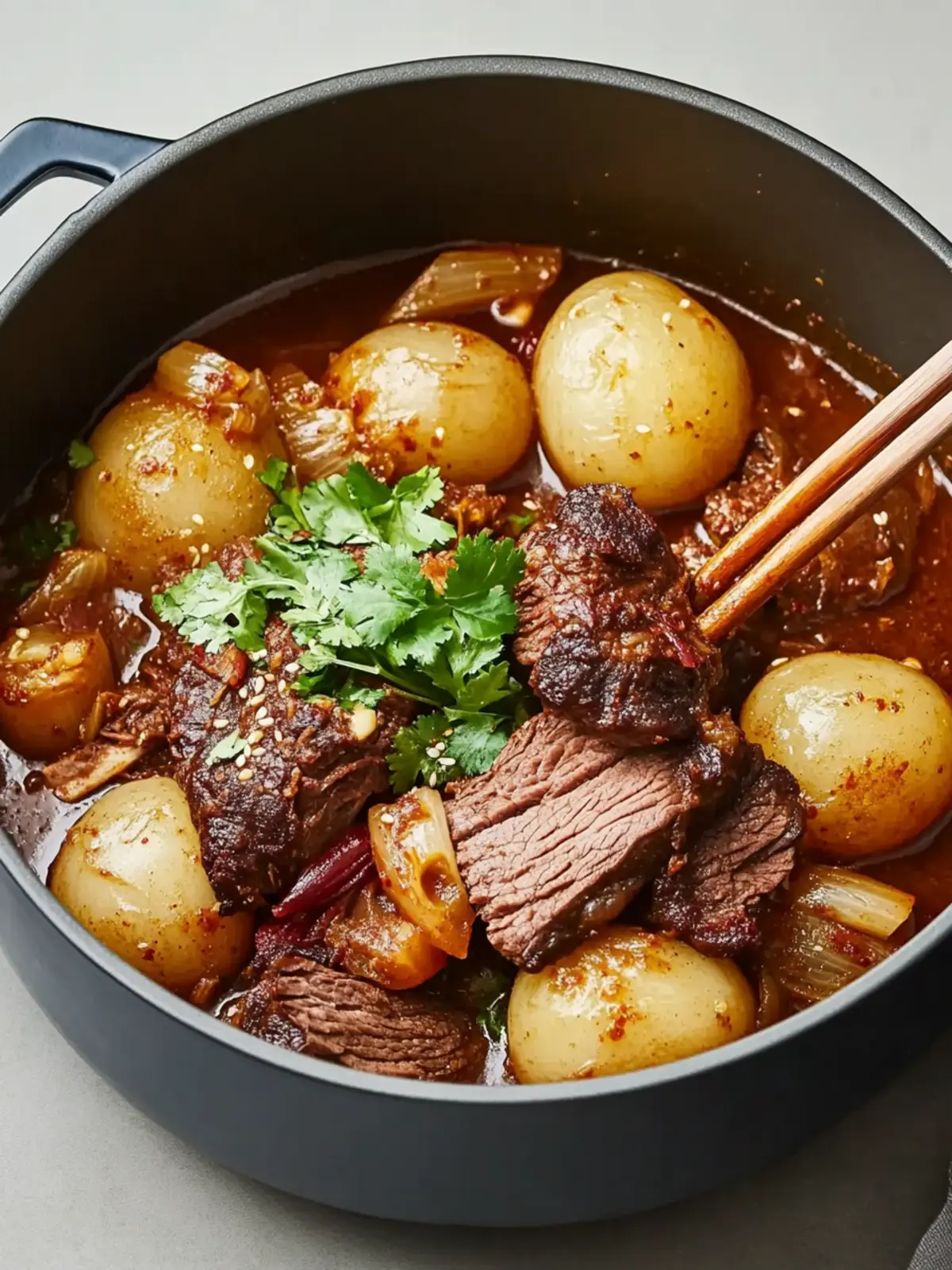
Expert Tips for Korean Style Pot Roast
-
Choose Quality Meat: Select a well-marbled beef chuck roast for maximum tenderness; less marbling can lead to a drier texture.
-
Browning Matters: Don’t skip searing the beef! This step adds rich flavor through caramelization that makes your Korean style pot roast truly mouthwatering.
-
Monitor Cooking Time: Cooking times may vary; check for tenderness around 3 hours to avoid overcooking, which can dry out the meat.
-
Let It Rest: Always allow the roast to rest for 15 minutes post-cooking. This helps the juices redistribute, making every bite more succulent.
-
Customize Spice Levels: Adjust the quantity of gochujang based on your heat preference; start small if you’re unsure, as it can get spicy!
-
Store Properly: Leftovers can last up to three days in an airtight container. For best flavor, reheat gently to maintain the moisture of your Korean style pot roast.
Korean Style Pot Roast Variations
Customizing your Korean Style Pot Roast allows you to express your culinary creativity while maintaining that cozy flavor we all love.
-
Vegetarian Delight: Swap beef for tofu or tempeh, using vegetable broth for a hearty plant-based option. It’s just as comforting and rich in flavor!
-
Root Vegetable Medley: Toss in chopped carrots or potatoes during the last hour of cooking for a wholesome addition that soaks up the delicious sauce.
-
Mushroom Magic: Add shiitake or portobello mushrooms for a savory earthiness that complements the beef beautifully, enhancing the umami experience.
-
Spicy Kick: Increase the gochujang for an extra punch of heat, or add sliced jalapeños for those who crave a fiery experience.
-
Herb Twist: Incorporate fresh herbs like thyme or rosemary for an aromatic twist that pairs wonderfully with the savory beef and sweet sauce.
-
Citrus Zing: Add a splash of orange juice or zest to the sauce mixture. This brightens the dish and adds a unique layer of flavor you won’t forget!
-
Asian Fusion: Mix in a tablespoon of sriracha to the sauce for a trendy twist, or consider adding a hint of sesame oil for a nutty finish.
-
Noodle Upgrade: Serve over noodles instead of rice for a comforting bowl of Korean beef noodles, making it an entirely new yet familiar dish!
What to Serve with Korean Style Pot Roast?
Creating a complete meal around your Korean Style Pot Roast opens the door to delightful flavor pairings and textures that will elevate your dining experience.
-
Steamed White Rice: The fluffy texture absorbs the savory sauce beautifully, making every bite even more satisfying.
-
Kimchi: This spicy, tangy side not only adds crunch but also complements the richness of the pot roast, creating a harmonious flavor balance.
-
Seasonal Vegetables: Add roasted carrots and broccoli for a vibrant touch, rounding out the meal with fresh and healthy elements.
-
Cucumber Salad: A light, refreshing cucumber salad contrasts the rich roast and adds a crisp texture and brightness to your plate.
-
Pickled Radishes: These tangy bites invigorate the palate, offering a sharpness that pairs perfectly with the earthy flavors of the pot roast.
-
Cold Noodle Salad: Serve with a chilled noodle salad drizzled in sesame dressing to introduce a delightful twist of flavor that complements this Korean dish.
-
Sautéed Bok Choy: This tender yet slightly crisp vegetable adds a beautiful touch of green and a subtle crunch, enhancing the overall meal experience.
-
Chilled Soju or Beer: Enjoy your meal with a glass of chilled soju or a light lager, perfectly matching the flavors while keeping the dining experience refreshing.
-
Chocolate Cake: For dessert, a light and rich chocolate cake can provide a sweet finish to a savory feast, creating a delightful end to a memorable dinner.
Make Ahead Options
These Korean Style Pot Roast are perfect for busy weeknights, allowing you to enjoy a comforting meal without the last-minute rush. You can marinate the beef chuck roast with gochujang and seasonings up to 24 hours in advance, enhancing the flavors as it sits in the refrigerator. Additionally, chop your aromatics, such as onions and garlic, a day ahead to save time. On the day of serving, simply sear the beef and combine it with the sauce before baking. This method ensures the roast remains just as delicious, and you’ll have a rich, flavor-packed dish waiting for you after a long day.
How to Store and Freeze Korean Style Pot Roast
-
Fridge: Store the cooled Korean Style Pot Roast in an airtight container for up to 3 days. This keeps it fresh and tasty for quick meals throughout the week.
-
Freezer: For longer preservation, freeze the pot roast in a freezer-safe container for up to 3 months. Make sure to label the container for easy identification later on.
-
Thawing: When ready to enjoy, thaw the frozen pot roast overnight in the fridge for optimal texture and flavor retention.
-
Reheating: To reheat, place the thawed pot roast in a saucepan over low heat, adding a splash of beef broth to maintain moisture. Heat gently until warmed through.
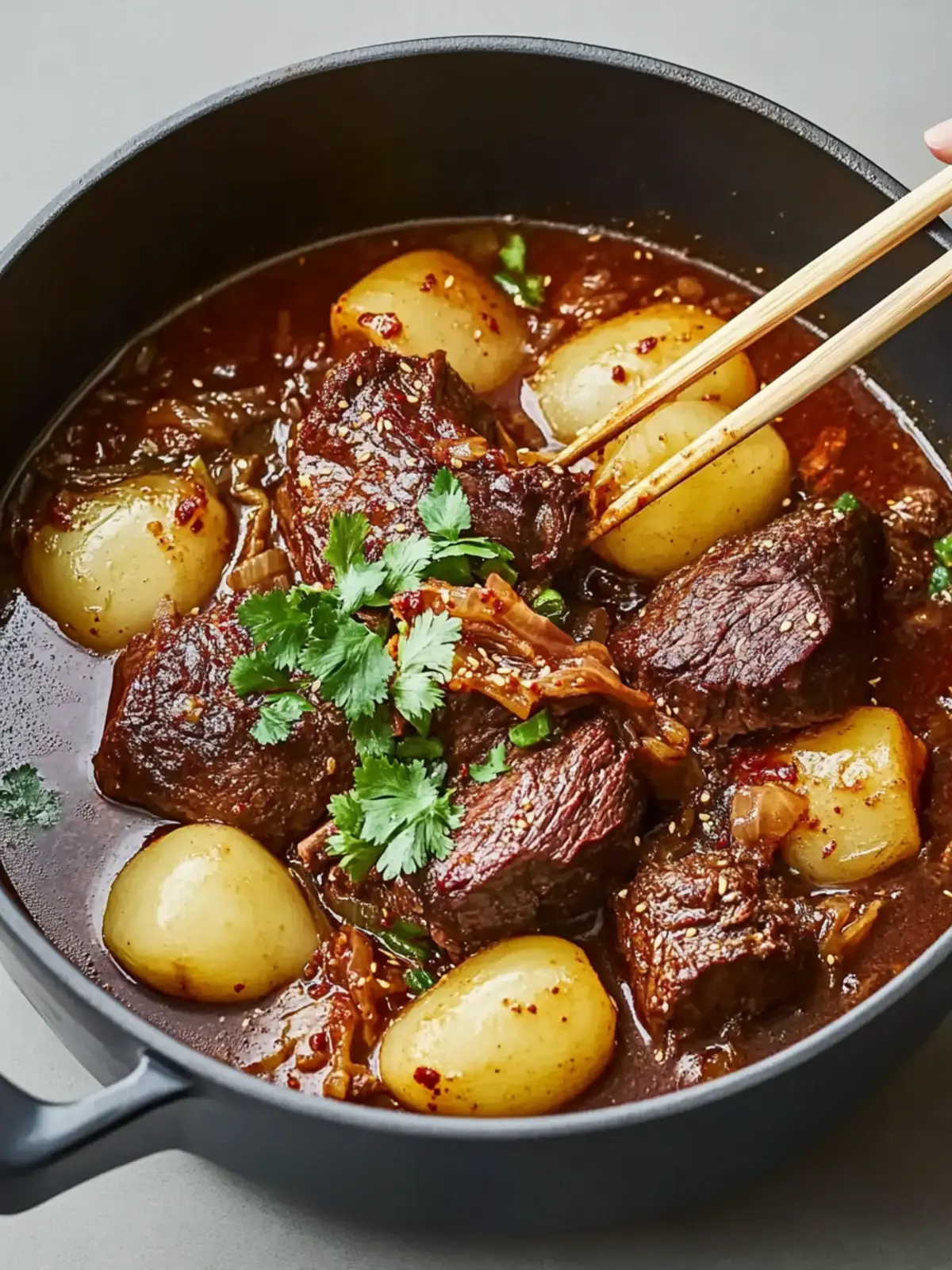
Korean Style Pot Roast Recipe FAQs
What type of beef is best for Korean Style Pot Roast?
Absolutely, for the most tender and flavorful result, a well-marbled beef chuck roast is ideal. Its rich marbling ensures that the roast remains juicy and tender during cooking. You can also substitute it with brisket or short ribs if you’re looking for a different flavor profile.
How do I store leftover Korean Style Pot Roast?
To keep your leftovers fresh, store the cooled pot roast in an airtight container in the refrigerator for up to 3 days. Ensure it’s sealed well to prevent any flavor loss. For longer storage, you can freeze it in a freezer-safe container for up to 3 months, making sure to label it for easy identification later on.
Can I freeze Korean Style Pot Roast?
Yes, you can! To freeze, first let the pot roast cool completely, then transfer it to a freezer-safe container. It can be stored for up to 3 months. When you’re ready to enjoy it, simply thaw it overnight in the refrigerator before reheating for the best texture and flavor.
What should I do if my pot roast is tough after cooking?
If you find your pot roast is tough, it may need more time to cook. I recommend checking for tenderness after 3 hours; if it’s not fork-tender yet, cover it again and bake for another 30 to 60 minutes. The key to a tender roast is patience, as slow cooking helps break down the meat fibers.
Is Korean Style Pot Roast suitable for special diets?
The Korean Style Pot Roast is generally gluten-free if you use tamari or coconut aminos instead of soy sauce. However, if you’re serving it to those who have allergies or specific dietary restrictions, make sure to check all your ingredient labels, particularly the sauces. For a vegetarian option, you can substitute the beef with tofu or tempeh and use vegetable broth instead!
How do I enhance the flavor of my Korean Style Pot Roast?
For an even richer flavor, consider marinating the beef in the gochujang, brown sugar, and soy sauce mixture the night before cooking. This allows the flavors to penetrate deeply into the meat, making the pot roast even more delicious. Also, don’t forget to let the roast rest for 15 minutes after cooking; this helps retain all those wonderful juices!
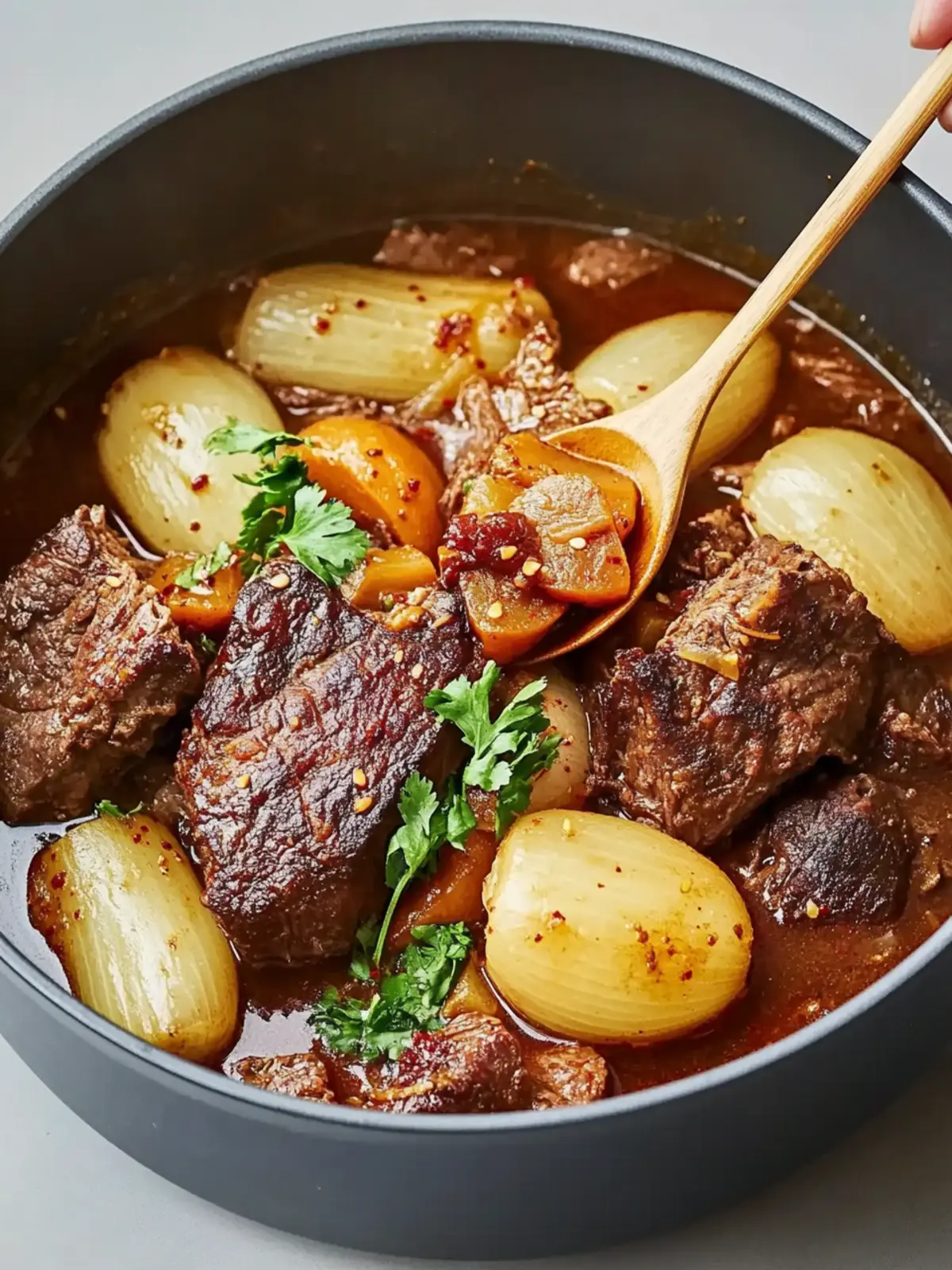
Korean Style Pot Roast: Comfort Food for Cozy Nights
Ingredients
Equipment
Method
- Preheat oven to 325°F (165°C).
- Heat vegetable oil in a large Dutch oven over medium-high heat. Sear the chuck roast for 4-5 minutes on each side.
- Remove the beef and set it aside. Add chopped sweet onion, minced garlic, and grated ginger to the pot; sauté for 3-4 minutes.
- In a bowl, mix gochujang, brown sugar, soy sauce, and beef broth until well combined.
- Return the beef to the pot and pour the sauce mixture over it. Cover and bake for 3-4 hours until fork-tender.
- Let the roast rest for 15 minutes before slicing. Serve over cooked rice, garnished with fresh cilantro, alongside kimchi.