
There’s something undeniably heartwarming about the aroma that fills your kitchen as Korean Beef Noodles slowly simmer away, wrapping you in a culinary embrace. Picture this: tender beef chuck slowly cooking to perfection in a medley of savory broth, aromatic ginger, and a hint of spicy gochujang, all mingling together to create a dish that is truly soul-warming. This recipe is not just about the delightful flavors; it’s about the ease and comfort it brings to your table, making it an ideal choice for busy weeknights or special family gatherings.
With minimal prep and the magic of a slow cooker at your side, you will discover that creating a delicious, hearty meal is simpler than ever. Imagine curling up with a steaming bowl of these savory noodles after a long day, or delighting your friends when they gather around your table. Join me as we dive into this satisfying dish that transforms everyday ingredients into a comforting culinary experience that you’ll want to recreate again and again.

Why are Korean Beef Noodles so delightful?
Simplicity at Its Best: This slow-cooker recipe takes minimal effort, making it an easy choice for busy days.
Rich Flavor Profile: The combination of tender beef, savory broth, and spicy gochujang ensures each bite is bursting with flavor.
Perfectly Hearty: Packed with protein and nutrients, this dish serves as a wholesome meal the whole family will enjoy.
Versatile Ingredients: Easily customize by adding your favorite veggies or swapping proteins to suit your taste.
Time-Saving Cooking: Set it and forget it! Enjoy a delicious, home-cooked meal without spending hours in the kitchen.
Crowd-Pleaser: Whether for a cozy night in or a gathering with friends, this dish is sure to impress your guests!
Korean Beef Noodles Ingredients
-
For the Beef
• Beef Chuck – A robust cut providing rich flavor and tenderness when slow-cooked. -
For the Broth
• Beef Broth – Adds depth and moisture to the dish; low-sodium options can be used.
• Water – Used to dilute the broth; adjust quantity for desired sauce consistency.
• Soy Sauce – For umami flavor and saltiness; tamari can be a gluten-free substitute.
• Brown Sugar – Balances the saltiness from soy sauce; coconut sugar is a good alternative. -
For the Flavor
• Ginger (minced) – Enhances flavor with a slight warmth; fresh ginger is preferred.
• Garlic (minced) – Adds aromatic depth; consider garlic powder as a substitute.
• Sesame Oil – Provides a nutty aroma and flavor; can be replaced with olive oil for a lighter taste.
• Black Pepper – Enhances flavor; use white pepper for a milder taste.
• Gochujang – Korean chili paste that imparts heat and depth; sriracha can be a substitute for spice. -
For the Noodles
• Noodles – Fresh or dried noodles (udon or ramen) serve as the base; swap for gluten-free noodles as necessary. -
For Garnish
• Green Onions – For garnish, adding freshness and crunch.
• Sesame Seeds – Optional garnish providing crunch and a nutty flavor.
• Fresh Cilantro – Optional for garnish, adding brightness to the dish.
These Korean Beef Noodles come together beautifully, allowing you to savor every comforting bowl of deliciousness!
How to Make Korean Beef Noodles
-
Prepare the Beef: Season your beef chuck pieces generously with black pepper. This simple step adds flavor right from the start, ensuring your beef has a delicious base when cooked.
-
Mix the Sauce: In a mixing bowl, combine the beef broth, soy sauce, brown sugar, minced ginger, minced garlic, sesame oil, and gochujang. Mix well until everything is fully blended and the sugar has dissolved, creating a savory sauce.
-
Slow Cook: Place the seasoned beef in the slow cooker and pour the prepared sauce over it. Cover and cook.
- Cook Time: Set on low for 6-8 hours or high for 3-4 hours until the beef is wonderfully tender and shreds easily with a fork.
-
Cook Noodles: About 15-20 minutes before you’re ready to serve, prepare your noodles according to package instructions. Drain well and set aside, allowing them to be ready for a cozy mix.
-
Combine: Once the beef has become irresistibly tender, gently stir in the cooked noodles so they can soak up the rich broth. This is where the magic happens, as flavors meld together beautifully.
-
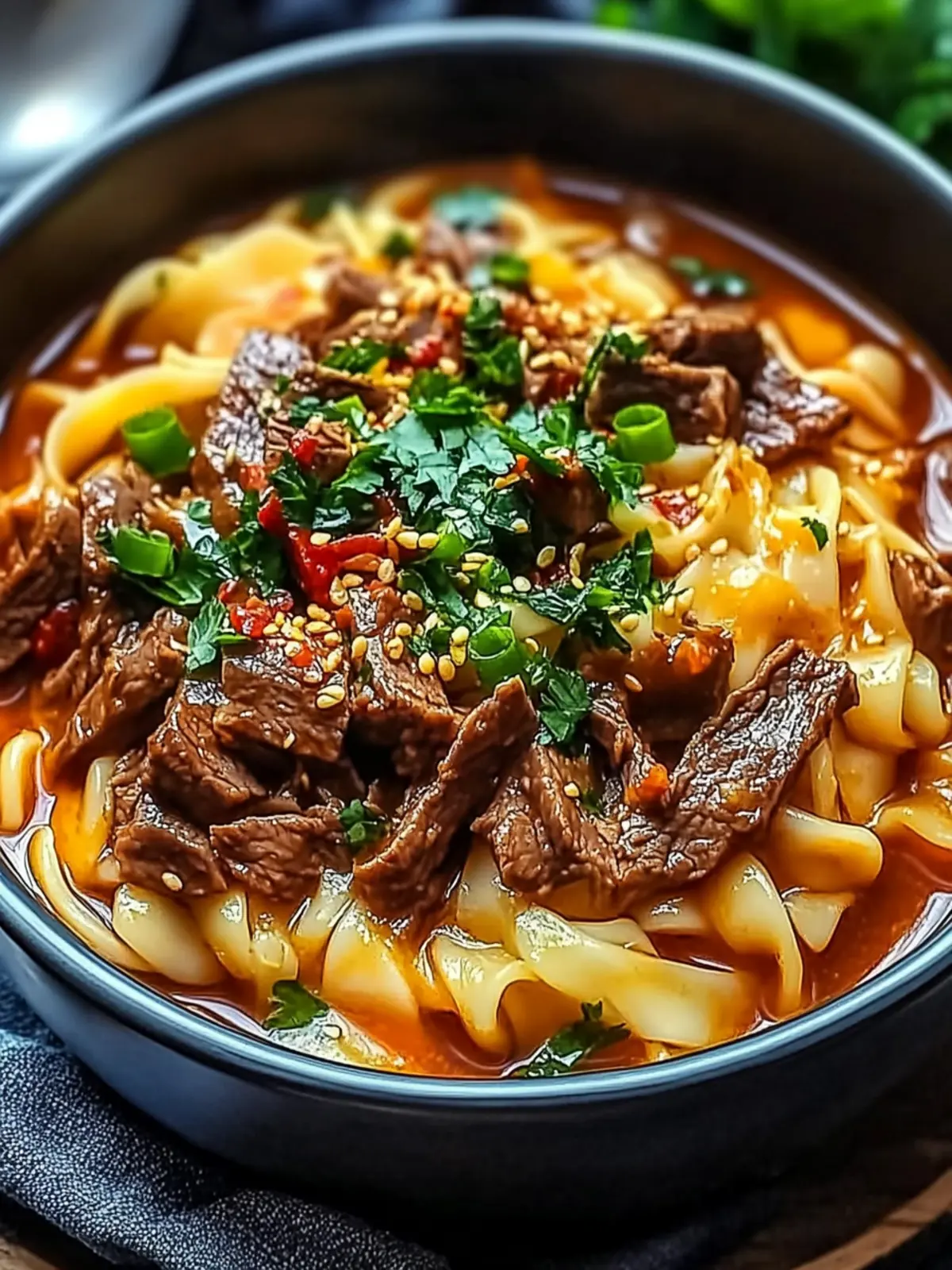
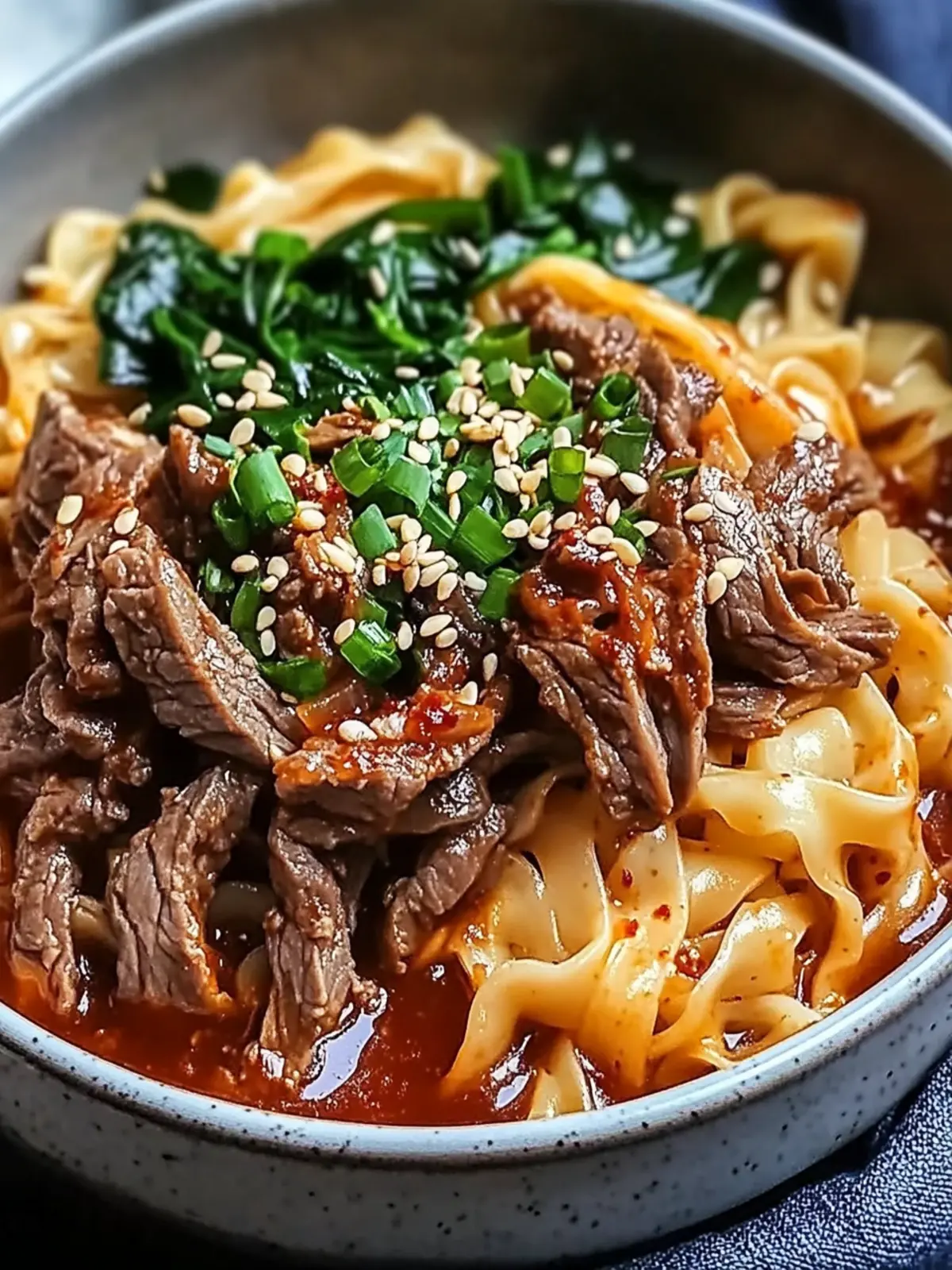
Serve: Ladle generous portions of beef and noodles into bowls. Top each serving with fresh green onions, a sprinkle of sesame seeds, and cilantro if desired to add a pleasant crunch and brightness.
Optional: For an extra touch of authenticity, serve with kimchi on the side.
Exact quantities are listed in the recipe card below.
Make Ahead Options
These Korean Beef Noodles are perfect for meal prep, allowing you to enjoy a hearty dish without the last-minute rush! You can season and brown your beef chuck up to 24 hours in advance and store it in the refrigerator, which enhances its flavor. Additionally, prepare the sauce by mixing the beef broth, soy sauce, brown sugar, ginger, garlic, sesame oil, and gochujang, and keep it in an airtight container for up to 3 days. When you’re ready to enjoy your meal, simply transfer the beef and sauce to the slow cooker, cook on low for 6-8 hours, and prepare your noodles fresh right before serving. This method ensures that your dish remains just as delicious while saving precious time during busy weeknights!
Korean Beef Noodles Variations
Feel free to get creative with your bowl of Korean Beef Noodles and explore these fun twists!
-
Chicken Thighs: Swap beef chuck for chicken thighs for a lighter, yet equally flavorful alternative. The tender chicken absorbs the rich sauce beautifully.
-
Mushroom Medley: Add a variety of mushrooms like shiitake and portobello for an earthy, meaty texture that’s completely plant-based. They soak up the sauce for incredible flavor!
-
Spicy Kick: Increase the heat by adding extra gochujang or some crushed red pepper flakes. Your taste buds will thank you for the added zing!
-
Veggie Delight: Toss in a handful of bok choy or snap peas at the end of cooking. They’ll add a bright crunch and increase the nutritional value of your dish.
-
Gluten-Free: Use gluten-free noodles to accommodate dietary restrictions. They’ll still provide a comforting base while keeping the dish deliciously satisfying.
-
Noodle Types: Experiment with different types of noodles like rice noodles or even zoodles! Even gluten-free options can shine in this recipe, perfect for any dietary need.
-
Coconut Flavor: Replace beef broth with coconut milk for a creamy, tropical twist that balances out the heat of gochujang. You’ll create a uniquely comforting experience!
-
Sweet & Savory: Add a splash of pineapple juice or diced peaches for a refreshing sweetness that pairs magically with the savory elements. It’s a delightful surprise in every bite!
Each variation opens up a world of flavors while maintaining the comforting essence of Korean Beef Noodles, allowing you to customize this beloved dish to your heart’s desire.
Expert Tips for Korean Beef Noodles
-
Beef Selection: Choose fresh beef chuck for optimum tenderness and flavor; avoid older cuts that may end up tough after slow cooking.
-
Sauce Balance: Taste your sauce before adding it to the slow cooker; adjust soy sauce and brown sugar to achieve your preferred level of saltiness and sweetness.
-
Noodle Timing: Add noodles 15-20 minutes before serving to maintain their perfect texture. Overcooking may lead to mushy noodles, ruining the dish.
-
Garnish with Flair: Don’t skip the green onions, sesame seeds, and fresh cilantro—these add a burst of flavor and a pleasing crunch to your Korean Beef Noodles.
-
Storage Pro Tip: Store leftovers in an airtight container for up to 3 days, but be cautious; noodles may absorb broth over time, so add a splash of water when reheating.
-
Slow Cooker Variations: Cooking times can vary by slow cooker model, so always check for tender beef before adding noodles to ensure a perfect result with each batch of Korean Beef Noodles.
What to Serve with Korean Beef Noodles?
Elevate your dining experience with delightful sides that will perfectly complement the hearty flavors of your delicious noodles.
-
Kimchi: This traditional Korean side adds a tangy crunch and spiciness that balances the richness of the beef.
-
Steamed Bok Choy: Lightly steamed bok choy provides a fresh, green element that enhances the dish’s color and nutritional value, making each bite refreshing.
-
Crispy Egg Rolls: Golden, crunchy egg rolls filled with tender veggies offer a satisfying contrast to the soft noodles, adding delightful texture with each mouthful.
-
Garlic Bread: A side of buttery garlic bread offers a wonderful opportunity to soak up any remaining broth, making your meal feel even more indulgent and comforting.
-
Sesame-Cucumber Salad: This light, crunchy salad brings a refreshing contrast to the rich beef, making it the perfect palate cleanser in between bites.
-
Sweet Red Pepper Ketchup: A delightful twist, this sweet and spicy condiment can be drizzled over the noodles, giving an extra burst of flavor that energizes each mouthful.
-
Chilled Soju or Beer: Pair your meal with a glass of chilled soju or a light beer, enhancing the warmth and heartiness of the Korean Beef Noodles, creating a true culinary experience.
Together, these pairings transform your simple meal into a full, engaging feast that family and friends will adore!
Storage Tips for Korean Beef Noodles
Fridge: Store leftovers in an airtight container for up to 3 days to maintain freshness. Be cautious, as noodles may absorb broth over time.
Freezer: Freeze Korean Beef Noodles in a freezer-safe container for up to 3 months. Separate the noodles from the broth to prevent mushiness when reheating.
Reheating: When ready to enjoy, thaw overnight in the fridge, then reheat on the stove over low heat, adding a splash of water or broth for the best texture.
Korean Beef Noodles Recipe FAQs
What type of beef is best for Korean Beef Noodles?
Absolutely! I recommend using beef chuck, as it offers a rich flavor and becomes incredibly tender when slow-cooked. Look for cuts that are bright red without dark spots, indicating freshness.
How should I store leftovers of Korean Beef Noodles?
Leftovers can be stored in an airtight container in the refrigerator for up to 3 days. Be mindful that the noodles may absorb some broth, so when reheating, consider adding a few splashes of water or broth to retain their texture.
Can I freeze Korean Beef Noodles?
Certainly! To freeze, I suggest separating the noodles from the broth. Place them in a freezer-safe container for up to 3 months. When you’re ready to enjoy, thaw overnight in the fridge, then reheat over low heat on the stove, adding a splash of broth for moisture.
What should I do if the beef isn’t tender after cooking?
If your beef isn’t shredding easily, it might need more time. Try cooking it on low for an additional 1 to 2 hours, checking periodically for tenderness. Ensuring even cuts and using the right cook time is key in achieving that melt-in-your-mouth texture.
Is this dish suitable for those with dietary restrictions?
Very! If you’re concerned about gluten, simply substitute the soy sauce with tamari, a gluten-free option. Also, you can use coconut sugar instead of brown sugar for a refined sugar-free alternative. Always check labels if allergies are a concern.
Can I add vegetables to the Korean Beef Noodles?
Absolutely! Adding veggies like bok choy or snap peas not only boosts nutrition but also elevates the flavors. You can toss them in about 30 minutes before serving to retain their crunch while soaking up the delightful broth.
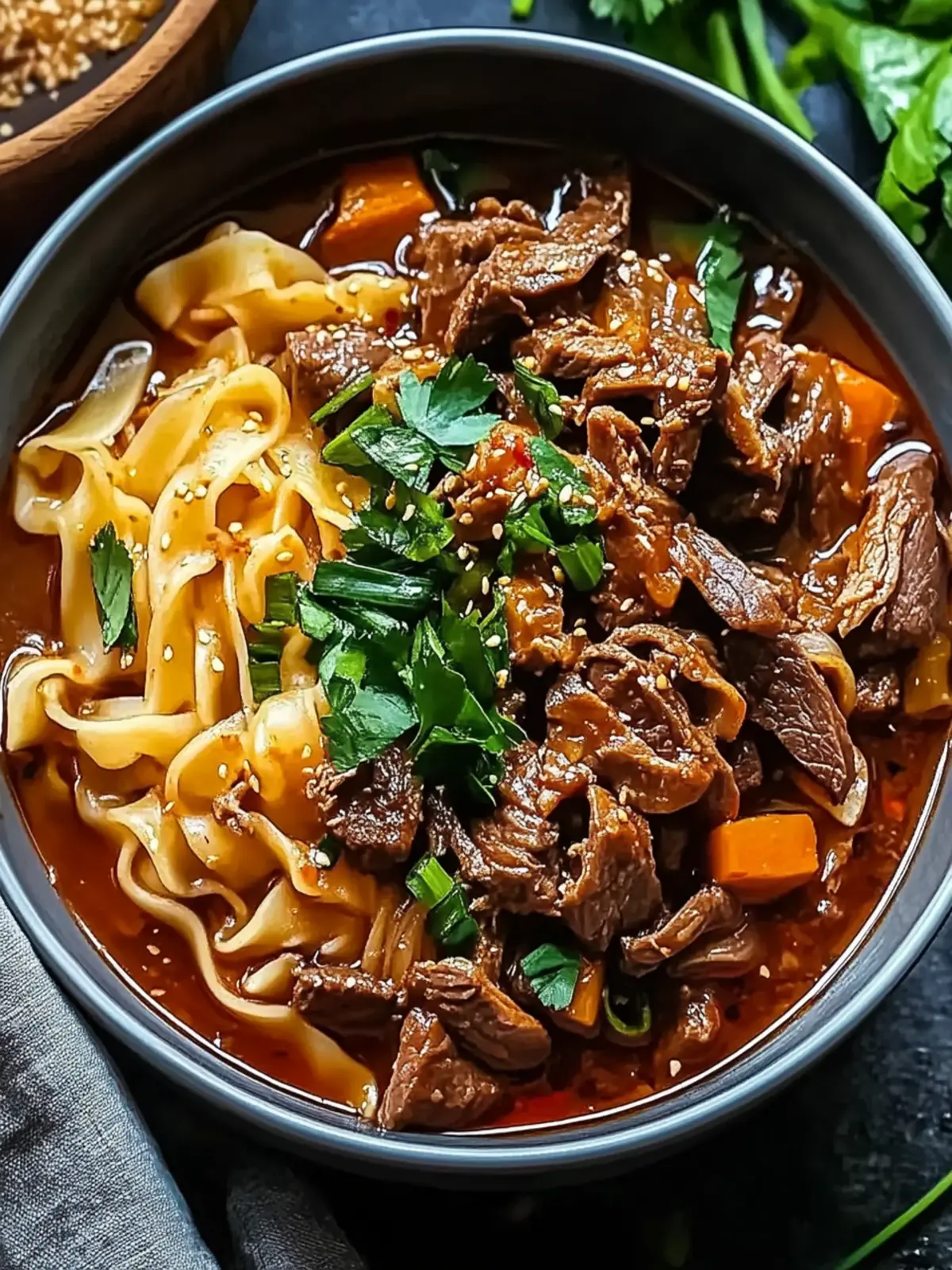
Korean Beef Noodles: Comforting Slow-Cooked Delight
Ingredients
Equipment
Method
- Season your beef chuck pieces generously with black pepper.
- In a mixing bowl, combine the beef broth, soy sauce, brown sugar, minced ginger, minced garlic, sesame oil, and gochujang. Mix well until everything is fully blended and the sugar has dissolved, creating a savory sauce.
- Place the seasoned beef in the slow cooker and pour the prepared sauce over it. Cover and cook on low for 6-8 hours or high for 3-4 hours until the beef is wonderfully tender and shreds easily with a fork.
- About 15-20 minutes before you’re ready to serve, prepare your noodles according to package instructions. Drain well and set aside.
- Once the beef has become irresistibly tender, gently stir in the cooked noodles so they can soak up the rich broth.
- Ladle generous portions of beef and noodles into bowls. Top each serving with fresh green onions, a sprinkle of sesame seeds, and cilantro if desired.