
The first time I tried Ethiopian food, I was mesmerized by the vibrant colors and rich flavors that danced on my palate. In particular, this Ethiopian Cabbage Stew captivated my senses. The moment you drizzle olive oil in your pan and toss in the garlic and ginger, your kitchen transforms into a warm embrace, pulling you into a world of aromatic delights.
This dish is a fantastic antidote to the mundane dinners you might be serving up during the week. It’s not just about the comforting taste; it’s a celebration of health, simplicity, and bold flavors. Each ingredient adds something unique and beneficial, making it a wholesome choice for those of us looking to move beyond fast food and into the realm of homemade goodness.
Perfect with rice or warm flatbread, this Ethiopian Cabbage Stew is as versatile as it is delicious. Gather your ingredients, and let’s dive into this culinary adventure that will elevate any meal.

Why will you love this Ethiopian Cabbage Stew?
Simplicity at its Finest: This dish requires just a handful of ingredients and minimal prep time, making it perfect for busy weeknights.
Bold Flavors: A delightful blend of garlic, ginger, and warm spices like cumin and turmeric creates a savory experience that excites the taste buds.
Healthful and Wholesome: Packed with fiber and vitamins, it’s a nutritious option that’s great for your well-being.
Versatile Pairings: Whether served with fluffy rice or warm flatbread, this stew adapts beautifully to your preferred sides.
Crowd-Pleasing Appeal: The vibrant colors and rich aroma are sure to impress family and friends, making it ideal for gatherings.
For a similar flavor explosion, don’t miss out on my spiced lentil recipe that’s full of surprises!
Ethiopian Cabbage Ingredients
• Unlock the flavors of this vibrant dish!
For the Stew
• Olive oil – Essential for sautéing and adding richness to your Ethiopian Cabbage stew.
• Garlic paste – Infuses the dish with a deep, aromatic flavor; you can use fresh garlic if preferred.
• Ginger paste – Adds a zesty kick; substitute with fresh grated ginger for a more intense taste.
• Turmeric powder – This vibrant spice gives the stew its golden hue and is known for its anti-inflammatory properties; remember to go easy on the second half until tasting.
• Cumin powder – Complements the other spices beautifully; for a smoky flavor, consider using smoked cumin.
• Red onion – Offers sweetness and depth; shallots are a great substitution if you’re out of onion.
• Carrots – Provide natural sweetness and color; you can use parsnips for a different flavor profile.
• Potato – Makes the stew hearty and filling; sweet potatoes work wonderfully as a healthier alternative.
• Water – Helps to create the stew’s savory base; replace some of it with vegetable broth for extra flavor.
• Cabbage – The star of the show! This ingredient brings texture and nutrition to your Ethiopian Cabbage stew.
• Salt – Enhances all the flavors; feel free to adjust based on your dietary needs.
• Black pepper – Freshly ground to elevate the spices; a pinch of chili powder can spice things up if you like heat!
How to Make Ethiopian Cabbage Stew
-
Heat the oil: In a cast iron skillet or Dutch oven, warm the olive oil over medium flame. This should take about 1-2 minutes until it’s shimmering.
-
Add pastes and spices: Stir in the garlic paste, ginger paste, half of the turmeric, and cumin powder. Cook these together for 30 seconds to infuse the oil with those delicious aromas.
-
Sauté the onion: Add the diced red onion to the skillet and sauté for about 1 minute, or until the onion turns a lovely golden brown, releasing sweetness into the mix.
-
Incorporate vegetables: Toss in the diced carrots, potatoes, the remaining turmeric, and water. Mix everything well, ensuring the spices evenly coat the veggies.
-
Cover and cook: Place a lid on the pot and let it simmer for 10 minutes over medium heat. This allows the flavors to meld beautifully while softening the vegetables.
-
Check doneness: After 10 minutes, use a fork to pierce the carrots and potatoes. If they’re not tender yet, give them an additional few minutes of cooking time until soft.
-
Add the cabbage: Stir in the chopped cabbage, seasoning with salt and pepper to taste. Cook covered for another 5 minutes until the cabbage is tender and has absorbed the vibrant flavors.
-
Serve and enjoy: Dish out your hearty Ethiopian Cabbage stew hot, pairing it perfectly with fluffy rice or warm flatbread for a delightful finish.
Optional: A squeeze of fresh lemon juice adds a bright touch!
Exact quantities are listed in the recipe card below.

Expert Tips for Ethiopian Cabbage
Flavor Boosting: Add a pinch of chili powder for spiciness. You can adjust it according to your taste preference for a more robust Ethiopian Cabbage experience.
Taste Test: Always taste the stew before serving. Adjust the salt and pepper accordingly to ensure the flavors pop.
Vegetable Variations: Feel free to substitute veggies! Add bell peppers or zucchini for added nutritional value while keeping the essence of the Ethiopian Cabbage stew.
Cooking Time: Don’t rush the cooking process! Allow each ingredient to soften and meld beautifully for the best flavor and texture in your stew.
Storage Wisdom: This stew keeps well in the fridge for up to 3 days. Reheat gently to preserve the flavors before serving again.
What to Serve with Ethiopian Cabbage Stew?
A symphony of vibrant flavors, this comforting stew deserves equally delightful companions.
-
Fluffy White Rice: Acts as a soft, neutral base, absorbing the stew’s bold spices perfectly. It’s a classic pairing that creates a satisfying meal.
-
Warm Flatbread: Ideal for scooping up the cabbage stew, its chewy texture complements the dish, offering a fun and delightful eating experience.
-
Cucumber Salad: A refreshing side that balances the stew’s warmth with a crisp crunch. The mild flavors of cucumber provide a fresh contrast to the rich spices.
-
Spiced Lentils: Rich in protein and flavor, lentils can echo the warm spices in the stew, creating a fulfilling and nutritious meal. They elevate the entire dining experience.
-
Sautéed Greens: Think Swiss chard or kale, lightly seasoned. The earthy bitterness of the greens adds another layer of flavor and nutrition, enhancing the wholesome nature of the meal.
-
Pickled Vegetables: Their tangy crunch can cut through the heartiness of the stew, offering exciting bursts of flavor with every bite.
-
Mint Tea: To wash down the meal, this refreshing drink cleanses the palate and adds a pleasant aromatic note, bringing a touch of Ethiopia to your dining experience.
Enjoy your enchanting culinary journey!
Make Ahead Options
These Ethiopian Cabbage Stew ingredients are perfect for meal prep, allowing you to savor a delicious homemade dinner even on your busiest nights! You can chop the vegetables (onion, carrots, potato, and cabbage) and store them in the refrigerator for up to 3 days in airtight containers. To maintain their freshness, keep the cut veggies separate from the seasonings until you’re ready to cook. When you’re prepared to enjoy this flavorful stew, simply heat the olive oil, add in the spices, and toss in your prepped vegetables. Finish by following the remaining cooking steps. This way, you’ll have an aromatic, hearty meal with minimal fuss and just as delightful as when made fresh!
How to Store and Freeze Ethiopian Cabbage
Fridge: Store leftover Ethiopian Cabbage stew in an airtight container in the refrigerator for up to 3 days. Reheat gently on the stove or in the microwave, adding a splash of water to retain moisture.
Freezer: For longer storage, freeze the stew in freezer-safe containers for up to 3 months. Thaw overnight in the fridge before reheating, ensuring the flavors stay intact.
Reheating: When ready to enjoy, reheat on low heat, stirring occasionally, until warmed through. This will help preserve the delicious flavors and textures.
Serving Suggestions: Consider serving with fresh sides like rice or flatbread for a complete and hearty meal upon reheating.
Ethiopian Cabbage Variations
Feel free to get creative and personalize this dish to suit your taste buds and dietary needs!
- Spicy Kick: Add chopped green chilies or a dash of cayenne pepper for a fiery twist that livens up the stew.
- Herb Infusion: Stir in some fresh chopped coriander or parsley just before serving for a burst of freshness and color.
- Smoky Flavor: Try using smoked paprika instead of regular for an unexpected depth that beautifully complements the spices.
- Protein Boost: Add cooked lentils or chickpeas for extra protein, making the meal even heartier and satisfying.
- Creamy Texture: A dollop of coconut cream or a splash of cream on top before serving adds a rich, luxurious touch.
- Root Veggie Delight: Switch out the potato for butternut squash or sweet potatoes for a sweeter flavor profile and delightful texture.
- Cabbage Alternatives: If you want to mix it up, use kale or Swiss chard instead of cabbage for an exciting greens variation.
- Nutty Addition: Toss in a handful of toasted nuts or seeds like almonds or pumpkin seeds just before serving for extra crunch and nutrition.

Ethiopian Cabbage Stew Recipe FAQs
What type of cabbage is best for this recipe?
Absolutely! For the best results in your Ethiopian Cabbage stew, use green cabbage as it holds up well during cooking and adds a lovely sweetness. If you prefer a different flavor, Savoy cabbage works beautifully due to its tender leaves and slightly milder taste.
How should I store leftover Ethiopian Cabbage stew?
Store your leftover Ethiopian Cabbage stew in an airtight container in the refrigerator for up to 3 days. Simply reheat gently on the stove or in the microwave, adding a splash of water to keep it moist while piping hot.
Can I freeze Ethiopian Cabbage stew?
Yes! Freezing is a wonderful way to enjoy your stew later. Pour the cooled stew into freezer-safe containers, leaving a little space for expansion, and freeze it for up to 3 months. When you’re ready to enjoy, thaw it overnight in the fridge and reheat on low heat, stirring occasionally.
What should I do if my stew is too watery?
If you find your Ethiopian Cabbage stew too watery, don’t worry—it happens! Simply simmer it uncovered on low heat for a few additional minutes, letting some of the excess liquid evaporate. Stir occasionally to prevent sticking and check the consistency until you achieve your desired thickness.
Are there any dietary considerations for this stew?
Very! The Ethiopian Cabbage stew is generally gluten-free and vegan, making it suitable for various dietary needs. However, if you or anyone you serve it to has specific allergies, double-check the ingredients—particularly spices and any accompanying sides like bread or sauces.
How can I elevate the flavor of my Ethiopian Cabbage stew?
You can really take the flavor up a notch by adding a pinch of chili powder for some heat, or even a splash of coconut milk for creaminess. Another delightful option is to squeeze fresh lemon juice before serving, as it brightens the dish wonderfully!
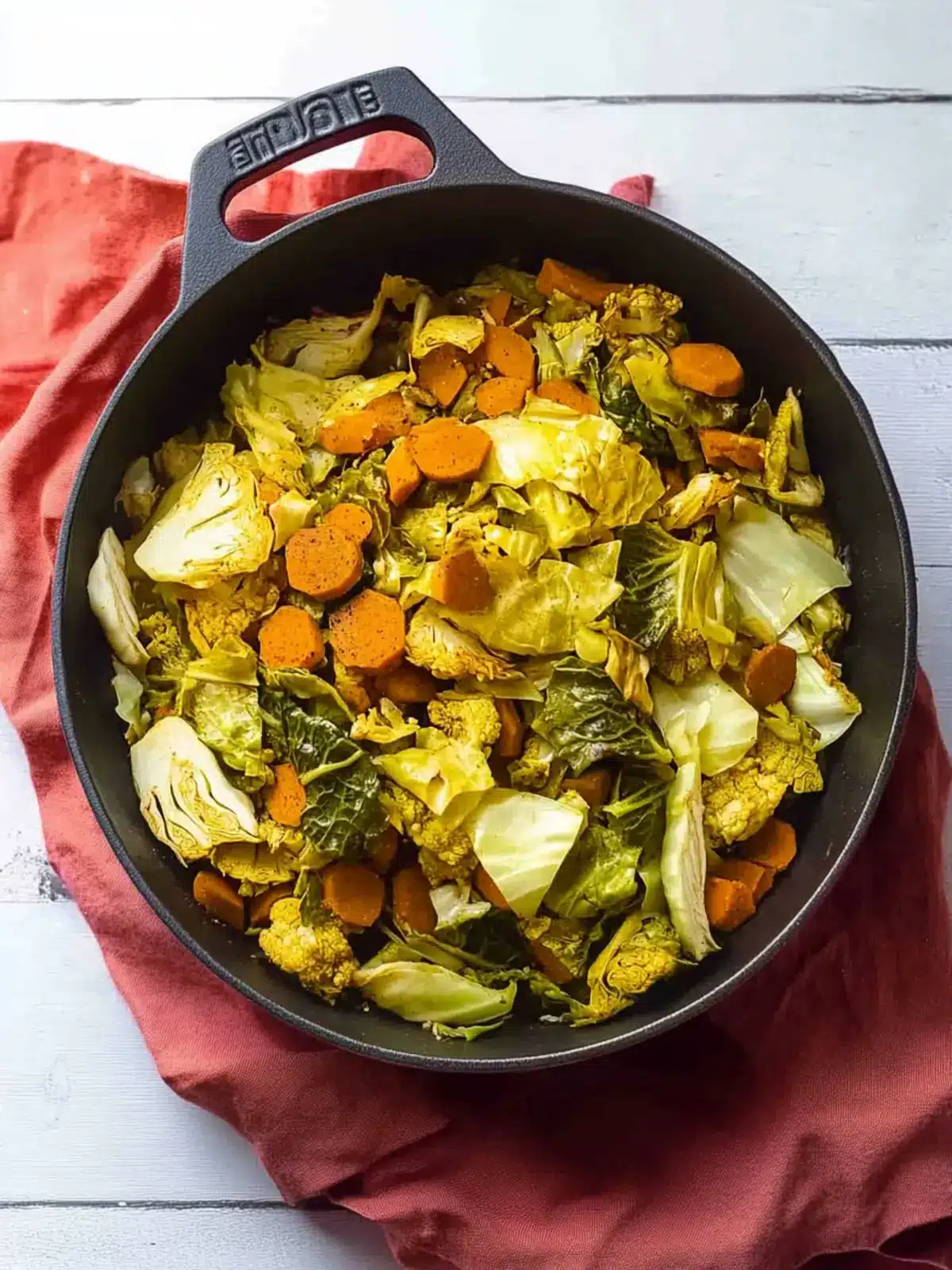
Ethiopian Cabbage Stew: A Vibrant Veggie Delight for Dinner
Ingredients
Equipment
Method
- In a cast iron skillet or Dutch oven, warm the olive oil over medium flame for 1-2 minutes until shimmering.
- Stir in the garlic paste, ginger paste, half of the turmeric, and cumin powder. Cook for 30 seconds.
- Add the diced red onion and sauté for about 1 minute until golden brown.
- Toss in the diced carrots, potatoes, the remaining turmeric, and water. Mix well.
- Cover and simmer for 10 minutes over medium heat.
- Check the doneness of the carrots and potatoes, cooking a few extra minutes if needed.
- Stir in the chopped cabbage, seasoning with salt and pepper. Cook covered for another 5 minutes.
- Serve hot, paired with rice or flatbread.